
I used to think wildlife protection mostly meant drawing a hard line around a protected area and keeping human activity outside it. The more I looked at conservation in real communities, though, the less practical that idea seemed. People already live, farm, work, travel, and raise families across many landscapes that wildlife also uses.
I also noticed that some of the most useful conservation actions are surprisingly local. A native garden, secure trash can, darker outdoor lighting, or a safer livestock enclosure can change how people and animals share space. Protecting wildlife without displacing communities starts with making that coexistence safer and more workable.
Make Everyday Landscapes More Wildlife-Friendly
Backyards, farms, ranches, neighborhoods, and city edges can provide habitat when people design them with local species in mind.
Planting native trees, shrubs, grasses, and flowering plants gives birds and pollinators food and shelter suited to the region. Replacing part of a manicured lawn with regionally appropriate vegetation can create connected pockets of habitat.
Chemical use deserves attention. Pesticides and herbicides can affect insects, birds, amphibians, and other parts of a local food web. Integrated pest management, targeted treatments, and natural controls can reduce unnecessary exposure while still protecting crops and gardens.
Prevent Conflict Before It Starts
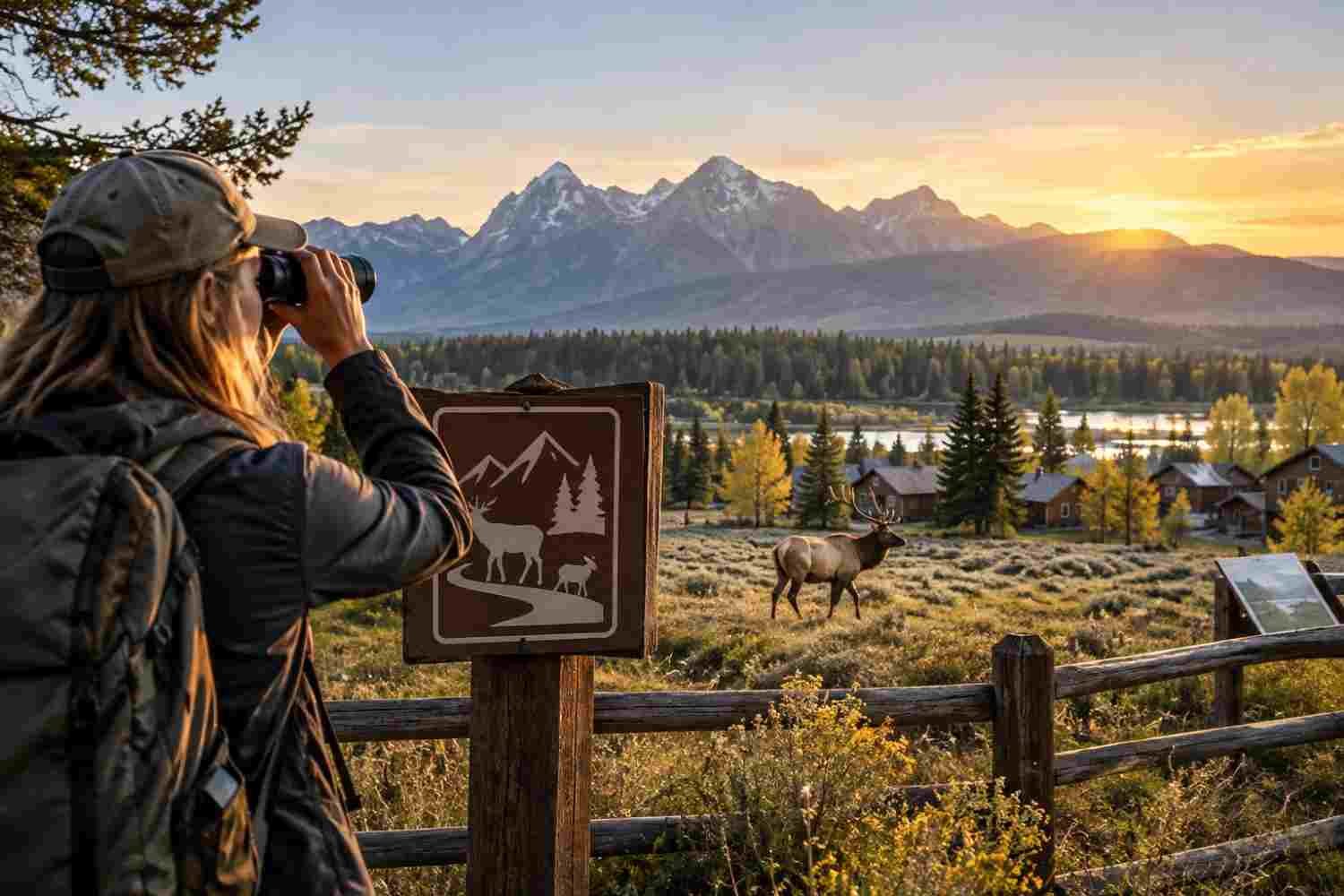
Human-wildlife conflict often becomes a conservation problem because animals find food, shelter, or easy routes through human spaces. Prevention is usually more useful than waiting for a dangerous encounter.
Secure garbage, compost, and animal feed can stop wildlife from learning that neighborhoods are reliable food sources. Pet food should not remain outside overnight, and pets need appropriate supervision around wildlife habitat. Dogs should be leashed where regulations require it, while keeping cats indoors can reduce pressure on birds and small mammals.
Lighting also matters. Excessive nighttime illumination can interfere with nocturnal wildlife, especially along movement routes. Shielded fixtures, warmer low-intensity lighting, timers, and motion sensors can reduce unnecessary light without leaving homes or public areas unsafe.
For agricultural communities, prevention can include predator-resistant livestock enclosures, wildlife-friendly fencing, crop protection, early-warning systems, and waste management.
Give Local Communities a Stake in Conservation
Conservation becomes more durable when people who live with wildlife have a meaningful role in decisions affecting their land and livelihoods.
Community members can identify wildlife routes, seasonal resource areas, conflict hotspots, culturally important places, and workable conservation rules. Local ecological knowledge can complement scientific surveys, especially when residents have observed seasonal patterns for generations.
Economic benefits matter too. Community conservation can support local guides, restoration workers, farmers, small businesses, and carefully managed tourism enterprises. Transparent benefit sharing gives residents a tangible reason to protect habitat rather than seeing wildlife as a competing claim on limited land.
Well-designed tourism can be part of that equation. Immersive wildlife experiences beyond safaris can spread visitor interest into locally operated experiences such as birding, conservation walks, wetlands visits, and community-led nature activities.
Protect Shared Landscapes, Not Just Protected Areas
Wildlife rarely respects boundaries. Animals move between forests, farms, ranches, wetlands, suburbs, and other working landscapes. Conservation plans therefore need to account for corridors, buffer areas, community forests, and agricultural land surrounding formal protected areas.
Farmers can maintain hedgerows, riparian vegetation, native field margins, and small habitat patches without abandoning productive land. Ranchers can use wildlife-friendly fencing and grazing practices where appropriate. Cities can preserve creek corridors and connected green spaces.
Incentives, technical assistance, conservation agreements, and voluntary stewardship programs can make wildlife-friendly practices more realistic than imposing rules without support.
Support Sustainable Local Agriculture
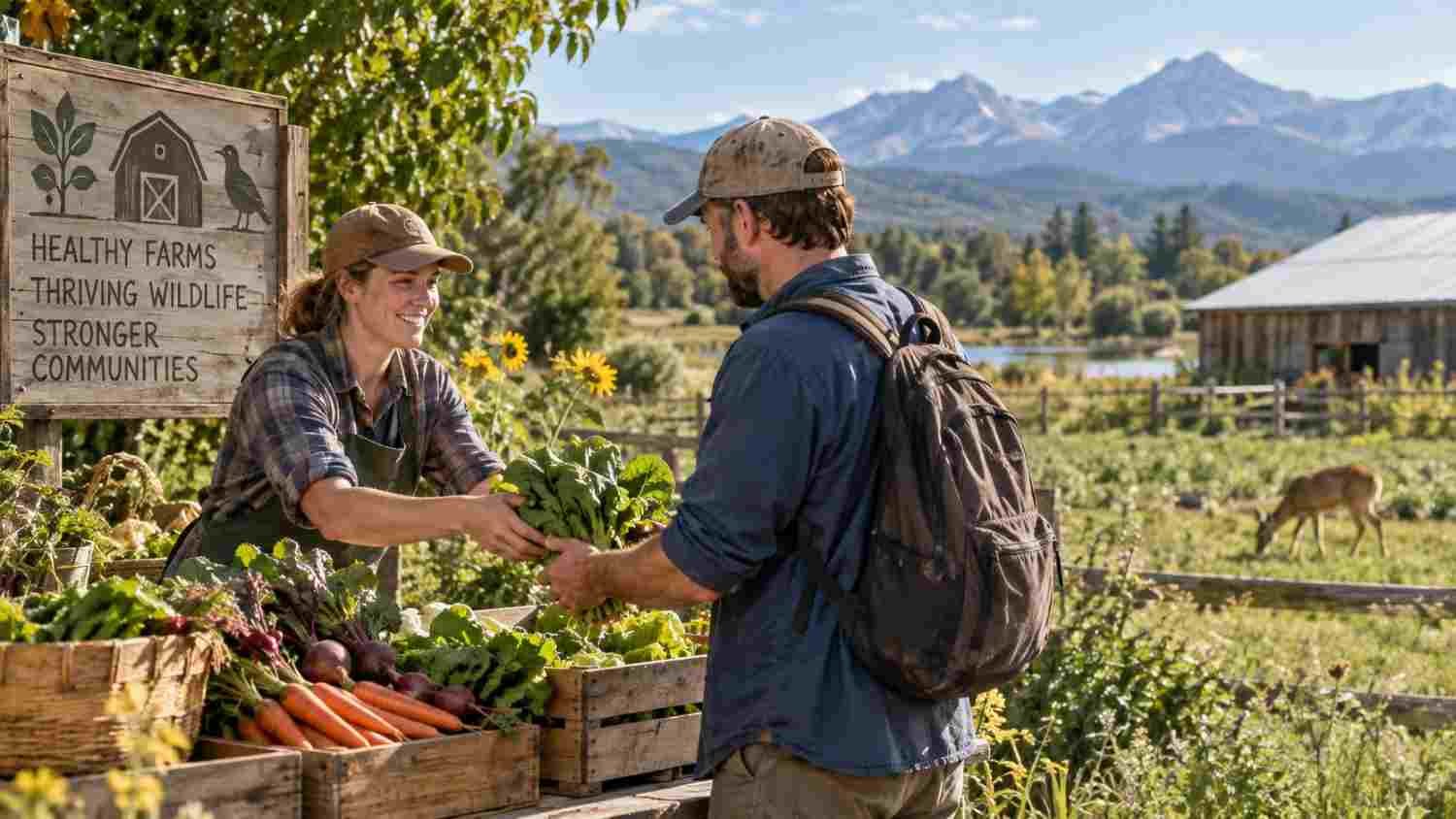
Agriculture can either intensify pressure on wildlife or become part of the conservation solution. Buying from regional producers does not automatically guarantee better environmental outcomes, but supporting farmers who use soil conservation, integrated pest management, diverse planting, or reduced chemical inputs can reinforce practices that benefit biodiversity.
Crop diversity, pollinator habitat, careful water management, and reduced pesticide use can protect ecosystems while maintaining production. The approach depends on local climate, crops, economics, and wildlife pressures, so conservation programs should avoid assuming one method fits every community.
Make Conflict Reduction a Shared Responsibility
The phrase reducing human-wildlife conflict describes more than keeping animals away from people. It means changing the conditions that make encounters dangerous or costly for both sides.
That can involve mapping recurring conflict, improving waste systems, protecting livestock, restoring habitat, creating safe movement corridors, and responding quickly when animals enter populated areas. Prevention and rapid support are often more sustainable when they are designed around local realities.
Relocation may sometimes be chosen voluntarily by households facing persistent risks or seeking better services. However, conservation should not treat moving people as the default solution. When relocation is proposed, residents need meaningful participation, clear information, fair compensation, livelihood planning, and safeguards for cultural and social ties.
FAQs: Practical Ways of Protecting Wildlife Without Displacing Communities
1. What does protecting wildlife without displacing communities mean?
It means designing conservation so wildlife protection and human livelihoods can coexist, using habitat management, conflict prevention, local participation, and sustainable economic opportunities.
2. Can communities help protect wildlife?
Yes. Communities can monitor wildlife, manage habitat, reduce conflict, support restoration, participate in governance, and develop conservation-linked livelihoods.
3. Does sustainable tourism always help wildlife?
No. Tourism can create jobs and conservation funding, but poorly managed visitation can disturb animals, strain resources, or concentrate benefits among a small group.
4. Is relocation ever part of conservation?
It can be, particularly when households voluntarily choose to move for safety or improved opportunities. Any relocation connected to conservation requires meaningful participation and attention to long-term livelihood and cultural impacts.
Why Coexistence Is Worth Building
Wildlife conservation works on landscapes that already have human stories, economic needs, and established communities. The practical challenge is not simply choosing between people and animals. It is finding land-use arrangements that give wildlife room to survive while allowing residents to live securely and participate in decisions that affect them.
The strongest conservation habits are often ordinary ones repeated consistently. When communities have useful tools, fair incentives, reliable information, and a real voice, protecting wildlife can become part of everyday life rather than a reason to push people away.