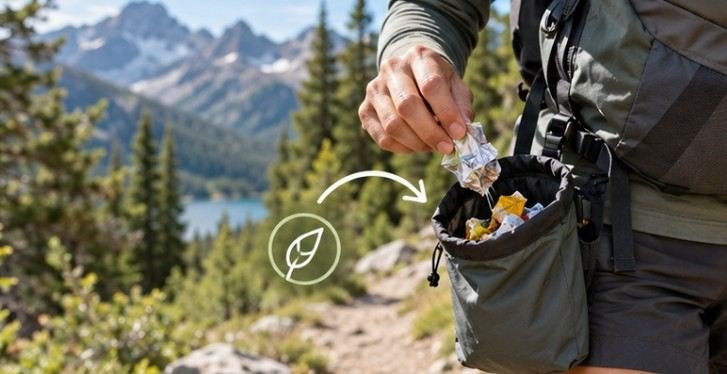
An apple core tossed beside a trail may look harmless, but wildlife does not see it as compost. Human food can change animal behavior, draw wildlife toward people, and increase dependence on unnatural food sources. USGS researchers have documented how food attraction can put animals closer to hikers, dogs, predators, and vehicles.
That is why learning how to reduce waste while hiking starts before your boots ever touch the trail. The biggest gains usually come from preventing trash at home, carrying reusable essentials, planning food carefully, and knowing exactly what must leave the backcountry with you.
The Best Trail Trash Is the Trash You Never Create
Waste reduction works better before a hike than after one. The U.S. Environmental Protection Agency places source reduction and reuse ahead of recycling because avoiding waste in the first place generally requires fewer resources than managing it afterward. Buying in bulk, choosing products with less packaging, reusing containers, and repairing equipment are all examples.
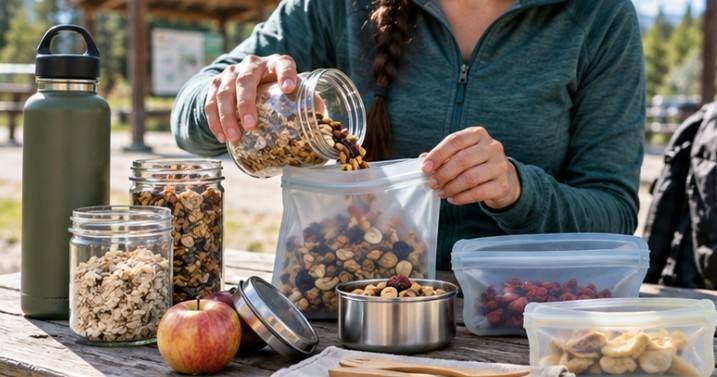
That principle translates surprisingly well to hiking. Instead of packing five individually wrapped energy bars, I can portion trail mix, dried fruit, crackers, or other snacks into one reusable silicone pouch or lightweight container. A refillable bottle replaces disposable water bottles, while one spoon can eliminate several pieces of plastic cutlery during a backpacking trip. The EPA specifically recommends reusable bottles and food containers as practical ways to reduce disposable waste.
Try the “Empty Pack” Test
Before leaving home, imagine returning from the hike and emptying every pocket of your backpack.
Anything you expect to throw away deserves a second look.
| Item you might pack | Lower-waste alternative |
| Single snack packets | Bulk food in reusable bags |
| Disposable water bottles | Refillable bottle or reservoir |
| Plastic forks and spoons | Lightweight reusable utensil |
| Paper cups | Reusable hiking mug |
| Disposable wipes | Washable cloth where appropriate |
| Heavily packaged gear | Durable, repairable equipment |
The goal is not to make a hike literally waste-free. Medical supplies, food-safety packaging, emergency equipment, and certain hygiene products may need to remain disposable. The smarter target is unnecessary waste at national park road trips for adventure seekers.
Food Scraps Still Count as Trash
One of the most persistent trail myths is that fruit peels and food scraps can safely be left because they eventually biodegrade. That overlooks what happens before decomposition.
Leave No Trace advises hikers to pack out kitchen waste, leftovers, fruit scraps, and other food because they can attract wildlife. USGS research similarly notes that animals exposed to human food can develop food-attraction behaviors and become increasingly comfortable approaching people.
So an orange peel, apple core, handful of nuts, or spilled trail mix should leave with you.
Meal planning helps here, too. Portion food according to the length of the trip instead of throwing oversized packages into your backpack. You reduce both packaging and the chance of hauling uneaten food home.
A dedicated reusable trash pouch is useful because tiny waste is easy to miss. Tea wrappers, foil corners, food crumbs, torn labels, used tape, dental floss, and snack fragments all disappear surprisingly easily into pack pockets.
Bathroom Waste Requires More Planning Than Food Waste
For many hikers researching how to reduce waste while hiking, hygiene is where practical questions get complicated.
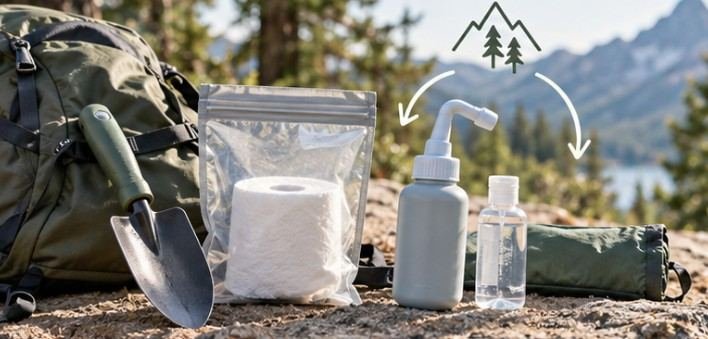
The National Park Service commonly recommends using available toilets first. Where catholes are permitted, the standard guidance is generally a hole 6 to 8 inches deep and at least 200 feet—roughly 70 large steps—from water, campsites, and trails. Used toilet paper and hygiene products should be packed out.
However, do not treat that as a universal rule. Soil depth, visitor pressure, elevation, desert conditions, river corridors, and local regulations can change the correct disposal method. Some areas require waste bags or otherwise favor packing human waste out. Big Bend National Park, for example, provides guidance on packing human waste out because decomposition is especially difficult in its dry environment.
Reusable Hygiene Can Cut Disposable Waste
A small backcountry bidet can reduce toilet-paper use significantly. Some hikers also use a washable pee cloth rather than toilet paper for urination.
The Appalachian Trail Conservancy specifically notes that a dedicated pee rag can reduce the toilet paper that must be packed out. It also emphasizes handwashing or sanitizer after using a privy or defecating.
Reusable menstrual products can reduce disposable waste for hikers who already use them comfortably, but reliability and hygiene matter more than achieving a theoretical zero-waste target. Never test unfamiliar personal-care equipment for the first time deep in the backcountry.
Repairing Gear Is Waste Reduction Too
Trail and hiking sustainability is often reduced to bottles and snack wrappers, even though outdoor equipment can represent a much larger material investment.
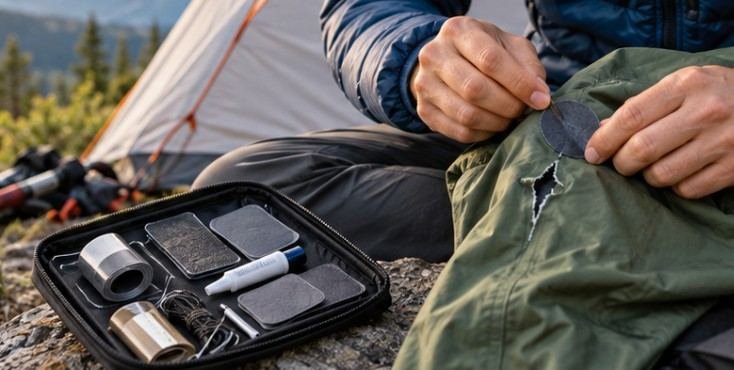
A tiny tear in a rain shell does not automatically require a replacement. Neither does a punctured sleeping pad, damaged tent mesh, loose backpack buckle, or worn boot lace.
The EPA includes repair among its recommended strategies for reducing waste because extending an item’s usable life postpones disposal and avoids unnecessary replacement.
For hikers, a small repair kit containing appropriate patches, tape, cord, a needle, and other gear-specific supplies can therefore serve two purposes: keeping equipment functioning in the field and keeping serviceable products out of the waste stream.
Buy durability where durability matters. A reusable item that fails after a few outings may offer less practical value than a well-made product you can maintain for years.
Use a Five-Minute Pre-Hike Waste Audit
A simple system makes lower-waste hiking easier than trying to remember dozens of environmental rules.
Before leaving, spread your food, hygiene supplies, water system, first aid, and gear on the floor. Identify anything designed to be discarded after one use. Remove unnecessary packaging at home, where recycling and proper disposal are easier. Portion food into reusable containers. Add one secure trash bag or pouch.
Next, check the land manager’s current sanitation and food-storage rules. Confirm whether toilets, catholes, WAG bags, bear-resistant containers, or other systems apply to your route.
Finally, leave space in your pack for everything that must return.
That last step matters. “Pack it in, pack it out” works only if hikers physically have somewhere secure to put messy or odor-producing waste.
Low-Waste Hiking Still Has Limits
Not every disposable product deserves elimination. Sterile first-aid materials, emergency medications, water-treatment packaging, blister care, and sanitation supplies can have legitimate safety advantages. Reducing waste should never mean compromising food safety, medical care, hydration, or emergency preparedness.
There is also a distinction between reducing waste and simply buying more “eco” gear. Replacing functional bottles, utensils, clothing, or backpacks merely to purchase environmentally marketed versions creates additional consumption.
Use what you already own first.
That approach follows the waste hierarchy far better than turning sustainability into another shopping list.
Frequently Asked Questions
1. Can I leave banana peels or apple cores on a hiking trail?
No. Food scraps can attract wildlife and alter natural feeding behavior. Pack out fruit peels, cores, crumbs, nuts, and leftovers just as you would wrappers.
2. What is the easiest way to reduce hiking trash?
Repackage food at home, carry a refillable bottle, use reusable containers and utensils, and keep a dedicated trash pouch accessible throughout the hike.
3. How do I dispose of toilet paper while hiking?
Where local rules require it, place used toilet paper in a secure resealable waste bag and carry it out. Always check the rules for the specific area you are visiting.
4. Does learning how to reduce waste while hiking require buying special gear?
Usually not. Start by reusing equipment you already own, removing packaging, repairing damaged gear, planning food carefully, and following the waste rules for your destination.
Leave the Trail With Less Than You Brought
The smallest piece of trail trash often starts with a decision made hours earlier at home. That makes waste reduction less about cleaning up after yourself and more about designing a smarter pack from the beginning.
I would start with one simple challenge: after your next hike, empty your backpack and count everything you throw away. Then ask which items could disappear from that pile on the following trip. Combine that habit with proper food storage, responsible bathroom practices, gear repair, and local regulations, and how to reduce waste while hiking becomes less of an environmental slogan and more of an ordinary hiking skill.