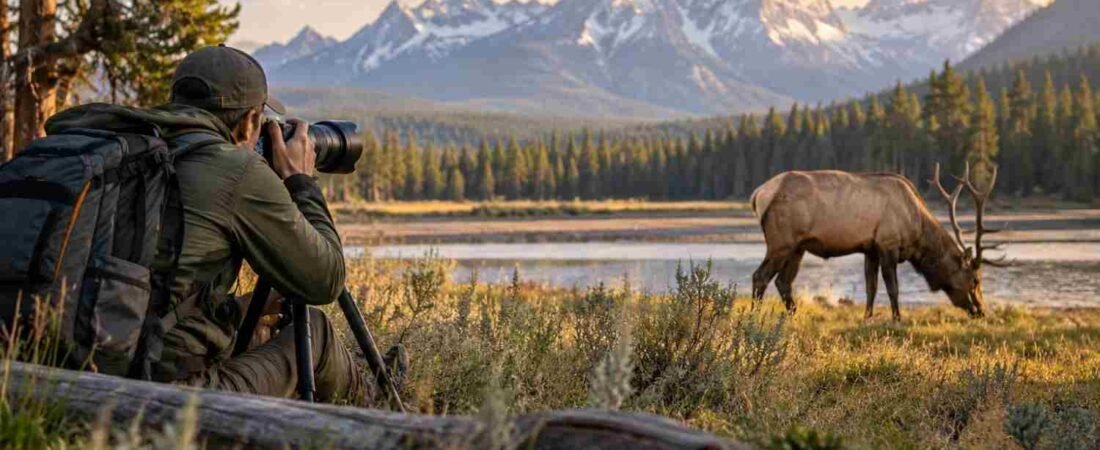
I’ve noticed that the wildlife photographs that stay with me are rarely the ones where an animal looks cornered by a camera. The strongest images feel quiet. A fox keeps walking, a heron keeps hunting, or a deer keeps grazing. That kind of photograph takes patience, but it starts with accepting that the animal’s comfort matters more than filling the frame.
I’ve also learned that getting a dramatic wildlife shot does not mean getting physically close. A long lens can compress distance, and waiting can turn an ordinary encounter into a memorable frame. The real skill is leaving the animal’s natural behavior unchanged.
Start With Distance, Not the Photograph
The safest approach is to decide how much space the animal needs before thinking about composition. There is no universal distance because species, location, season, and temperament differ. Park rules can also set minimum distances.
If your presence changes what the animal is doing, create more space. A bird that stops feeding or an animal that moves away is giving you information. National Park Service guidance recommends backing away when wildlife reacts and using zoom lenses rather than approaching.
Let the Lens Do the Walking
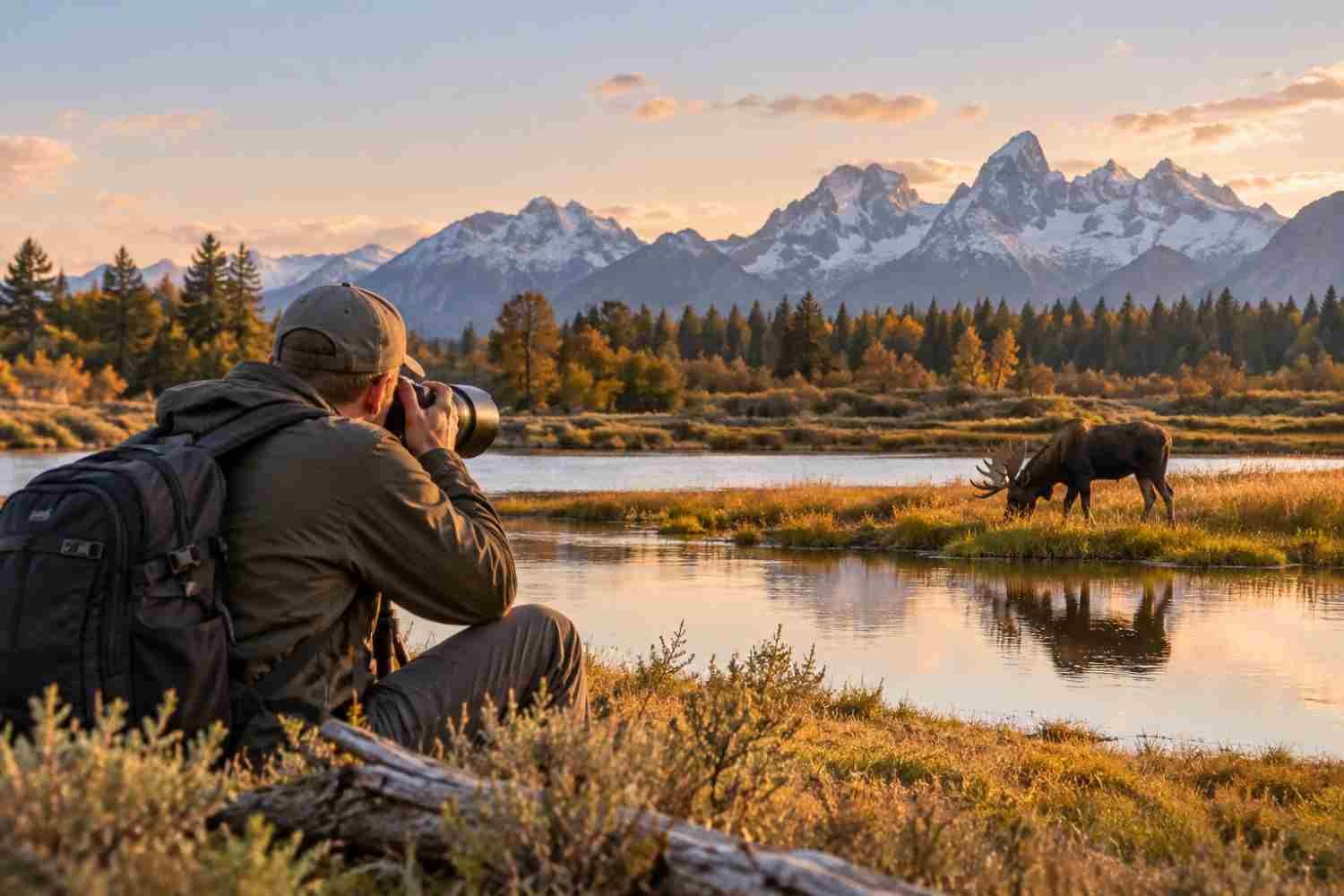
A telephoto lens is one of the most useful tools for ethical wildlife photography when conditions allow. A long lens can fill the frame without crossing its comfort zone.
You may capture feeding, grooming, hunting, resting, or social interaction. The National Park Service recommends long lenses and notes that seemingly close wildlife photographs can be made from greater distances.
Cropping can help too. A wider frame gives photographers room to compose later. Sharp eyes matter more than proving physical proximity.
Learn What the Animal Is Saying
Wildlife does not have to run away before a photographer has gone too far. Subtle changes can be enough.
Watch for repeated head turns, sudden freezing, altered feeding, defensive postures, or nervous movements. Birds may crouch, become still, or flush from a resting area. These reactions are a cue to stop advancing or leave.
Behavior knowledge becomes especially important around nests, dens, young animals, and feeding sites. Audubon advises photographers to back away when their presence changes a bird’s behavior and to take extra care around nesting birds.
Patience is often the better technique. Settle into one location and let the animal decide what happens next.
Blend In Without Manipulating Wildlife
Blinds, vehicles, natural cover, and neutral clothing can reduce how noticeable a photographer is. The goal is to observe without repeatedly attracting attention.
Move slowly, keep voices low, and avoid sudden gestures. A blind can help photographers remain stationary while animals use the area.
That patience also connects photography to wildlife adapting to changing ecosystems. Animals already deal with altered food sources, weather, habitat, and human activity. A photographer should avoid adding another unnecessary disturbance.
Protect the Place, Not Just the Subject
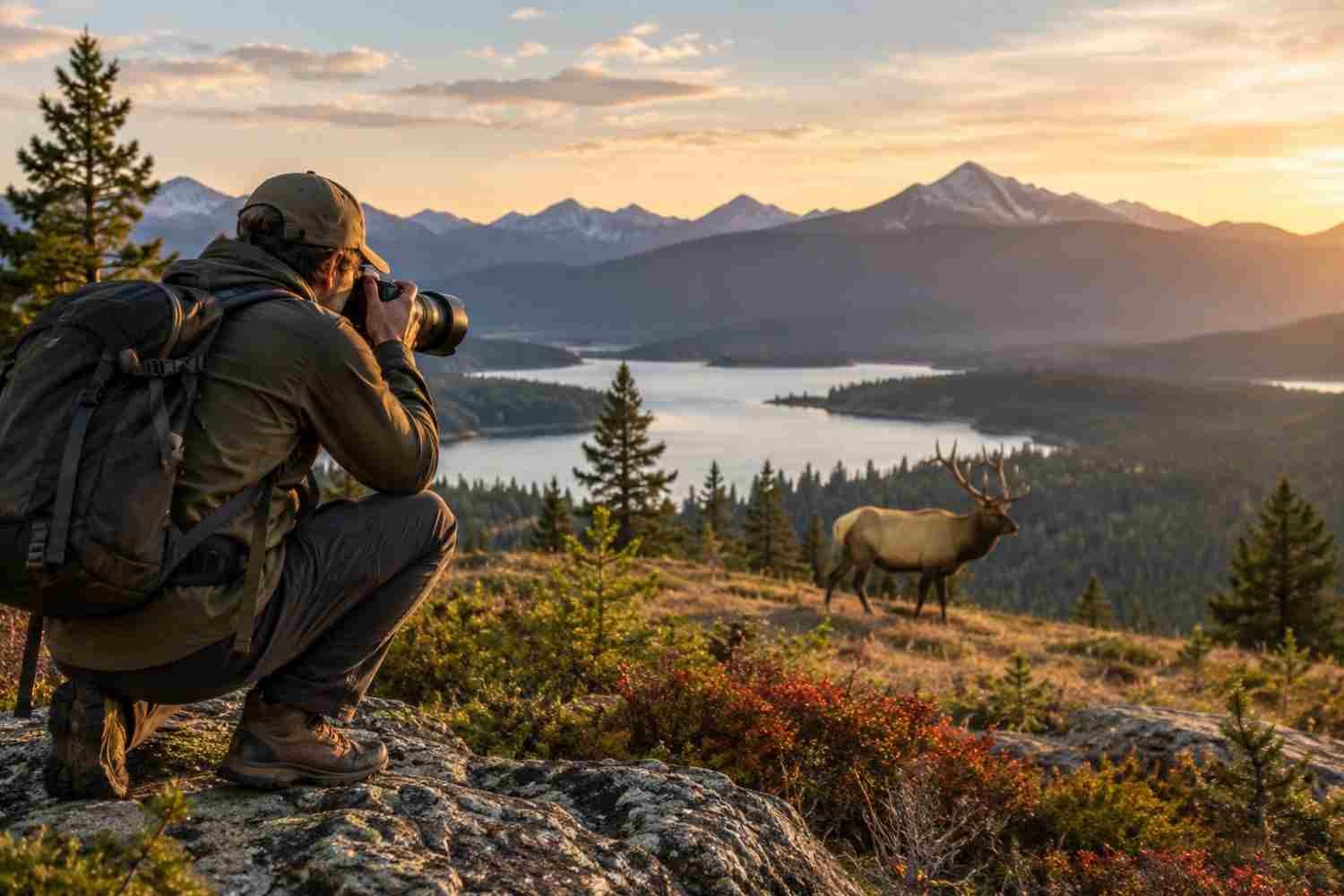
A portrait is not worth trampling vegetation or entering a nesting area. Stay on established trails where required, avoid moving cover, and keep away from dens and nests unless authorized access allows otherwise.
Nesting wildlife deserves particular caution. Human presence can interrupt feeding, expose young, or draw attention to a vulnerable location. Audubon warns photographers against trampling sensitive vegetation and disturbing surrounding wildlife.
Location sharing can create another problem. Posting exact coordinates of a rare owl, nesting colony, or sensitive species may bring a crowd to a place that cannot handle it. Keeping precise locations private can be part of ethical photography.
Skip Bait, Playback, and Risky Tricks
A photograph becomes less meaningful when the photographer engineers animal behavior for the frame. Feeding wildlife, using bait, chasing an animal, or playing recorded calls can draw animals away from normal activities and create stress.
Playback can make a territorial or nesting bird believe a rival or threat is nearby. Bait can also change feeding behavior and create associations with people.
Flash requires judgment, especially with nocturnal wildlife. Audubon advises avoiding flash on nocturnal birds because it can temporarily affect their ability to navigate, hunt, or avoid obstacles.
Drones deserve similar caution. They can disturb birds and may be prohibited in protected areas. Always check local rules before flying.
Let Healthy Habitats Shape the Photograph
Wildlife photography becomes more responsible when photographers pay attention to the larger ecological setting. A picture of an animal is also a picture of the place supporting it. Consider vegetation, water, trails, and other species.
This matters when thinking about how healthy ecosystems support wildlife. A photograph can celebrate an animal without reducing the surrounding environment to background scenery. Waiting beside an established trail, using a longer lens, and letting the animal choose its movements can protect both subject and habitat.
The U.S. Fish and Wildlife Service frames ethical wildlife photography around minimizing negative physical, behavioral, and environmental impacts, along with honest representation of how images were made.
FAQs: How Photographers Avoid Disturbing Wildlife While Getting Great Shots
1. What lens helps photographers stay away from wildlife?
A telephoto lens lets photographers fill the frame from a safer distance. Longer focal lengths are useful when approaching would change the animal’s behavior.
2. How can photographers tell when they are too close?
If an animal changes its behavior because of you, stop approaching and increase the distance. Freezing, fleeing, repeated attention, or defensive behavior can be warning signs.
3. Is baiting wildlife acceptable for photography?
Generally, photographers should not use bait or artificial lures simply to create a photograph. Such methods can alter natural behavior and introduce unnecessary risks.
4. Can photographers use drones around wildlife?
Rules vary by location, but drones can disturb wildlife, especially birds. Check regulations before flying and avoid using a drone when it could affect normal behavior.
The Photograph Should Never Come First
The best ethical wildlife photographs come from a change in mindset. Instead of asking how close a photographer can get, ask how naturally the animal can behave while the camera is present. Patience, observation, lens choice, and knowledge become more valuable than proximity. The result is a photograph of real behavior rather than a reaction to a person.
A strong wildlife photograph should preserve more than a moment. It should leave the animal, habitat, and next photographer with room to carry on.