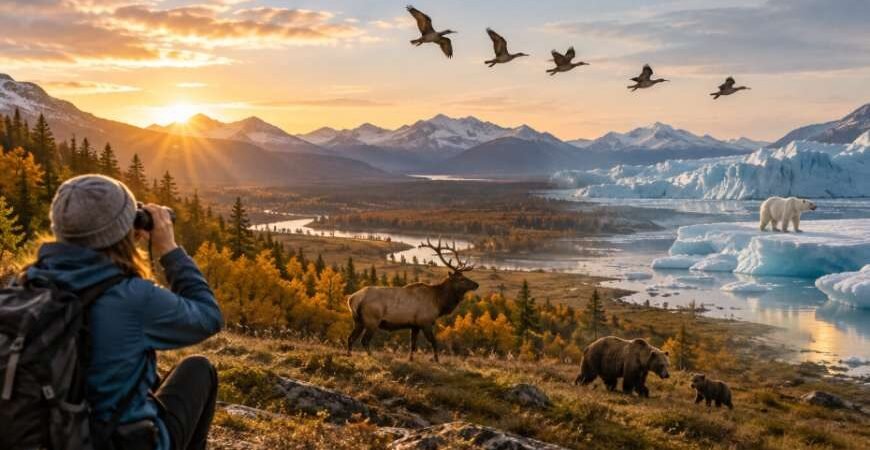
I have always found wildlife easiest to understand by watching what animals do rather than simply where they live. A bird arriving earlier, a herd lingering on a seasonal range, or a predator appearing near a neighborhood can look isolated. Repeated patterns reveal something. Climate change is altering the temperature, precipitation, snow, vegetation, and water conditions wildlife uses as signals.
I started noticing how easily climate change can make wildlife impacts sound abstract. Behavior makes the issue tangible. Animals respond through movement, feeding, reproduction, rest, and risk avoidance. Those responses can help them cope, but problems emerge when environmental changes happen faster than their instincts, abilities, or food sources can accommodate.
Wildlife Takes Cues From a Changing Environment
Temperature, daylight, rainfall, snow cover, water levels, vegetation growth, and prey availability help trigger migration, breeding, and feeding.
Scientists call the timing of recurring biological events phenology. Research shows climate change is shifting migration and breeding patterns, with temperature playing a major role in many regions. A behavioral adjustment, however, is not automatically successful adaptation. An animal may change its timing and still arrive when food is scarce.
Migration Is Moving With the Climate
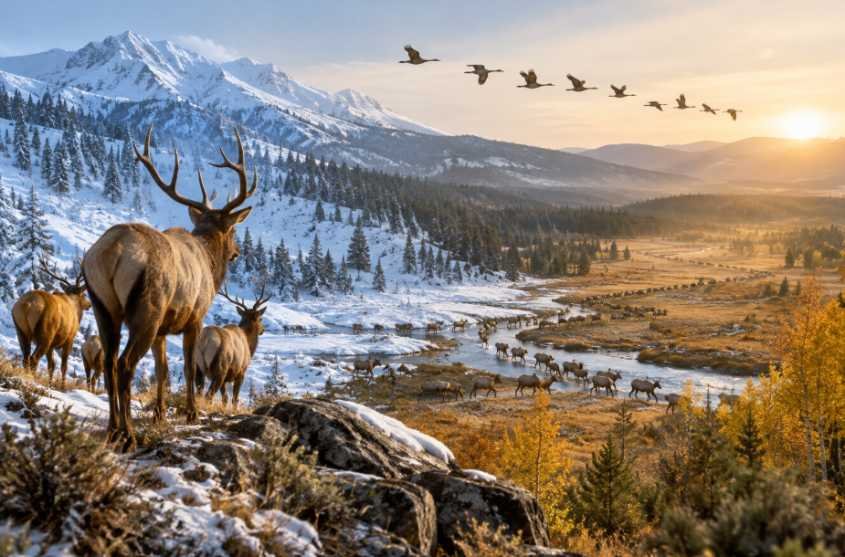
Western elk, mule deer, and pronghorn, for example, time movements around forage, weather, and snow conditions. As climate patterns change, these cues can become less reliable.
Earlier snowmelt may expose vegetation sooner, while drought can reduce forage quality. Birds face a similar challenge. Many have shifted migration timing, but those changes do not always match spring vegetation. Arriving too early or late can leave birds out of sync with peak food supplies.
Feeding Changes Can Ripple Through Food Webs
Foraging behavior is closely tied to climate. When plants flower earlier, insects emerge differently, fish shift with water conditions, or drought reduces vegetation, animals must adjust where and when they feed.
This can create a phenological mismatch, when connected species respond to environmental change at different rates. A bird may reach breeding grounds after an insect peak, leaving less food for chicks. A herbivore traveling farther for nutritious plants may spend more energy finding food.
Recent global research found increasing differences between plant and animal seasonal timing, showing why climate impacts cannot be understood by studying one species alone.
Breeding and Daily Behavior Are Shifting
Breeding timing can shift as temperatures and resources change. Earlier spring conditions may encourage reproduction sooner, but cold snaps, storms, or food shortages can still disrupt nesting.
Extreme heat can also alter daily routines. Animals may become more nocturnal or spend more time seeking shade and water. Drought can push wildlife toward new water sources, increasing encounters around homes, roads, and farms.
Snow-dependent species face another problem. When snow disappears early, white-coated animals such as snowshoe hares can become more visible against darker ground. The challenge is not simply warmer weather. It is the loss of seasonal camouflage while their winter coat remains.
Extreme Weather Can Force Rapid Decisions
Gradual warming is only part of the story. Heat waves, droughts, wildfires, floods, hurricanes, and severe storms can force behavioral changes within days.
Wildlife may abandon feeding areas, seek cooler habitat, shelter more often, or travel farther for water. Repeated intense events are harder because they can remove habitat, reduce food, damage nests, and interrupt movement.
Conservation therefore needs to consider whether animals can move safely as conditions change. Wildlife corridors, connected habitats, shaded refuges, and reliable water sources can give species more room to respond. Protecting wildlife from extreme weather can include restoring wetlands, maintaining forest cover, and preserving areas where animals can shelter during severe conditions.
Marine Wildlife Is Responding Below the Surface
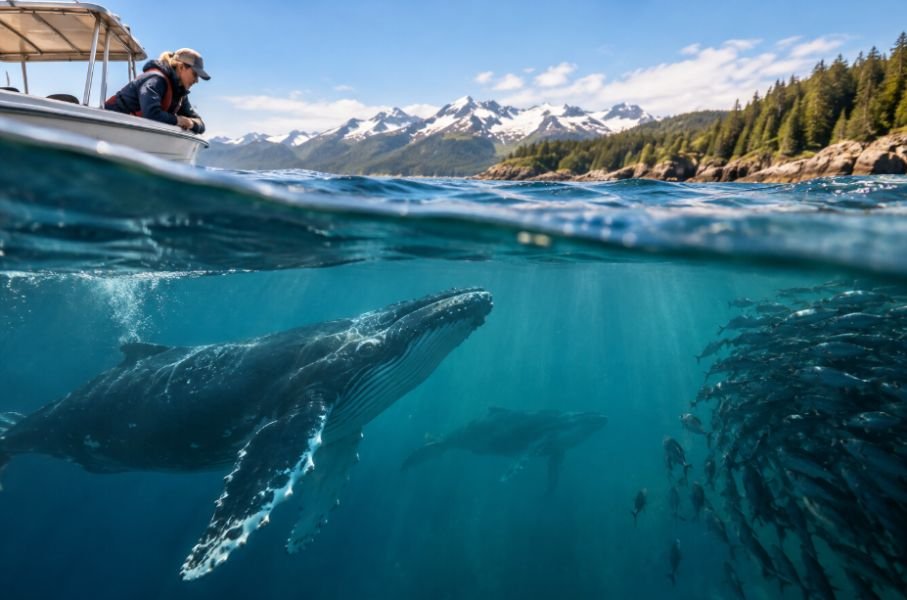
Warmer water can alter where fish feed, reproduce, and migrate. Ocean changes can affect plankton timing and distribution, creating consequences.
Seabirds and marine mammals may travel farther when prey becomes less predictable, especially during breeding. Coastal habitat changes can affect where animals gather. This can be especially disruptive when breeding depends on predictable seasonal food supplies.
Tourism adds another consideration. Responsible wildlife tourism can support conservation when it limits disturbance, while poorly managed encounters can interfere with feeding, breeding, or movement. Responsible marine tourism therefore requires careful visitor rules, local stewardship, and respect for natural behavior.
Can Wildlife Adapt Fast Enough?
Some species can change timing, routes, diets, or activity patterns relatively quickly. Others depend on specific cues, habitats, or food relationships that are harder to replace.
The greatest pressure often comes when several threats overlap. An animal may face warmer temperatures, habitat loss, altered food, disease, and development at once. Even a flexible species can struggle if there is nowhere suitable to move.
Why Behavior Gives Us an Early Warning
Wildlife behavior can reveal environmental change before a population decline becomes obvious. Shifts in migration, breeding, feeding, activity, and habitat use can show that seasonal relationships are already moving.
The larger lesson is that adaptation is not about whether an animal can tolerate warmer conditions.
These behavioral changes also show why healthy ecosystems support wildlife by providing the food, shelter, water, and connected habitats animals need to respond to environmental changes.
It is about whether the network around that animal changes in ways it can follow. When timing, habitat, and food remain connected, wildlife has more options.
Frequently Asked Questions
1. How does climate change affect animal behavior?
It can alter migration, feeding, breeding, daily activity, and habitat use by changing temperature, precipitation, snow, water, and food availability. The timing and severity of these changes can vary widely among species and regions.
2. What is a phenological mismatch?
It occurs when connected species change seasonal timing at different rates, such as birds arriving after peak insect abundance.
3. Can animals adapt their behavior?
Some species can adjust timing, routes, diets, or activity patterns, but flexibility varies and may not keep pace with rapid environmental change. Species with narrow habitat or food requirements may have fewer options.
4. Why does wildlife behavior matter to conservation?
Behavioral changes can reveal ecological stress and help managers protect corridors, habitats, refuges, and resources before impacts become more severe.
The Changes Worth Watching
The most revealing signs can be quiet: a migration date that keeps shifting, a breeding season that no longer lines up with food, or an animal appearing somewhere it rarely visited. These changes connect climate conditions to everyday survival. The same attention matters when protecting marine wildlife through tourism, where visitor behavior can shape disturbance, influence animal movement, and often support more thoughtful conservation decisions over time.
Wildlife does not experience climate change as a statistic. It experiences a different season, a missing food source, a changed route, or a landscape that no longer provides what it once did. Those signals show how climate is reshaping life.