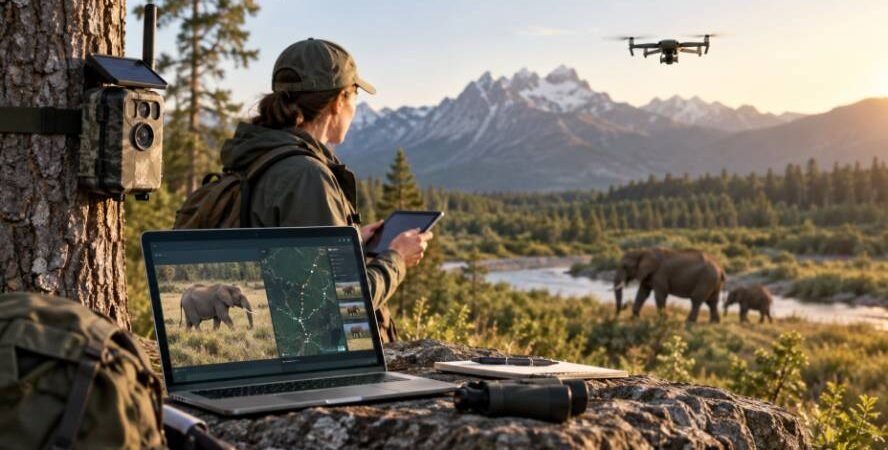
I used to think wildlife monitoring mostly meant researchers trekking through forests, waiting for a glimpse, and recording what they saw. That picture feels incomplete now. A camera can watch a trail overnight, a tracking tag can follow an animal for hundreds of miles, and a water sample can reveal that a species passed through without anyone seeing it.
I also noticed that the biggest change is not simply having better gadgets. It is how quickly conservation teams can turn observations into decisions. Technology can reveal movement, behavior, habitat changes, and potential threats at a scale that often challenges direct sightings alone.
Why Wildlife Monitoring Needed a New Approach
Endangered animals are often difficult to find, widely dispersed, or active when people cannot safely observe them. Traditional surveys still matter, but they can be expensive and limited in scale. Better tools can make surveys consistent over time.
Modern monitoring adds another layer. Instead of relying on occasional sightings, conservationists can collect information repeatedly across large areas. That creates a fuller picture of population trends, habitat use, and behavior.
If a species changes its routine, a tracking device might show an animal avoiding a familiar corridor while remote imagery reveals that vegetation or water availability has changed. Those signals can prompt investigation before a problem is obvious.
Cameras and Sensors Can Watch Without Constant Human Presence
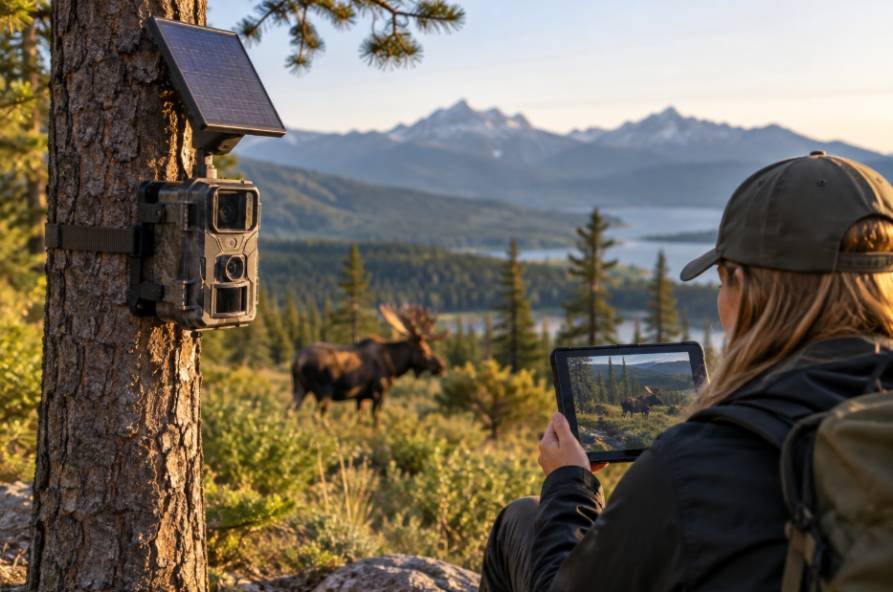
Camera traps are practical tools for monitoring elusive wildlife. Motion-triggered cameras can record animals moving through forests, grasslands, mountains, and protected areas without requiring researchers to stand nearby. Images can show which species are present and when they are active.
The challenge is volume. A long-running project can produce millions of images. AI-assisted image recognition can help sort those files, identify species, and reduce routine classification work. Researchers can spend more time interpreting patterns.
Acoustic monitoring adds another dimension. Recorders can capture animal calls where visibility is poor, while sound analysis can help detect species presence and changes in activity. It can also pick up chainsaws or gunshots, providing signals of potential threats.
Tracking Animals Across Large and Difficult Landscapes
GPS and satellite-linked tags have changed what researchers can learn about animal movement. Scientists can build movement records showing migration routes, habitat preferences, and responses to changing conditions.
For species crossing roads, farms, coastlines, or borders, this can reveal where protection is needed. It can also help identify wildlife corridors connecting fragmented habitats.
Drones extend this perspective from above. Aerial surveys can cover areas that are difficult to reach on foot, while thermal cameras can help locate animals or people under low-light conditions. Satellite imagery works at an even larger scale, helping conservationists monitor deforestation, fires, habitat loss, and other landscape changes.
AI Turns Wildlife Data Into Faster Decisions
Collecting information is only half the job. The conservation value comes from interpreting it.
Machine learning can compare datasets and identify individuals from distinctive markings, reducing repetitive manual work. Computer vision is increasingly useful for turning large collections of wildlife images into information researchers can actually analyze.
AI also supports anti-poaching efforts. Predictive systems can combine historical incidents, terrain, patrol information, and other variables to help conservation teams decide where limited resources may be useful. Tools such as SMART help rangers record and evaluate patrol activity, connecting field observations with management decisions.
The goal is not to replace rangers or biologists, but to help them process information faster. A useful alert still needs human judgment, local knowledge, and verification before it becomes a conservation action.
Detecting Animals Without Seeing Them
Some advances work at a microscopic level. Environmental DNA, or eDNA, allows researchers to test water, soil, or other samples for genetic traces left by animals. This can help confirm that a species is present even when it is rare, hidden, or difficult to capture.
Biologging tags can record location, diving depth, temperature, and other biological measurements. For marine species, these records can reveal responses to changing ocean conditions and food availability.
Together, these methods reduce the need for direct encounters, which can limit disturbance.
From Monitoring to Meaningful Protection
Technology becomes most useful when data leads to action. A movement map can inform a corridor, while a camera record can confirm breeding activity.
As conservation groups learn more about animal behavior, tourism can be connected with habitat protection and research.
This also creates opportunities for immersive wildlife experiences beyond safaris, allowing visitors to learn about monitoring, habitats, and conservation without making close animal encounters the sole focus.
This is where why wildlife tourism is shifting from observation to conservation becomes relevant: better monitoring can make animal welfare and habitat health central concerns.
Animals may alter migration routes, feeding times, breeding patterns, or habitat use as conditions shift. Long-term tracking can make those shifts visible.
The Bigger Shift in Wildlife Protection
The biggest change may be that conservation is less dependent on occasional snapshots. A camera, acoustic recorder, tracking tag, satellite image, or DNA sample can add another piece to a larger picture of an animal’s life and habitat. Over time, those pieces can reveal patterns that a field visit could miss.
Technology does not replace conservation work. It makes conservation more informed. Better evidence can help recognize threats earlier and protect important habitats across longer conservation planning timelines. These long-term records are especially useful for understanding climate-driven changes in wildlife behavior, because repeated observations can show whether shifts in movement or habitat use are temporary or persistent.
Frequently Asked Questions
1. How do camera traps help endangered animals?
Camera traps record wildlife without requiring researchers to remain nearby. They can reveal species presence, activity patterns, population changes, and interactions within a habitat.
2. Can AI identify individual animals?
Yes. Computer vision systems can sometimes distinguish individuals using markings such as spots, stripes, scars, or unique body patterns, reducing manual analysis.
3. What is environmental DNA?
Environmental DNA is genetic material that animals leave behind in places such as water or soil. Researchers can analyze samples to detect species without directly seeing or capturing them.
4. Does technology replace wildlife researchers?
No. Technology improves data collection and analysis, but researchers still interpret evidence, verify findings, work with communities, and decide what action is appropriate.