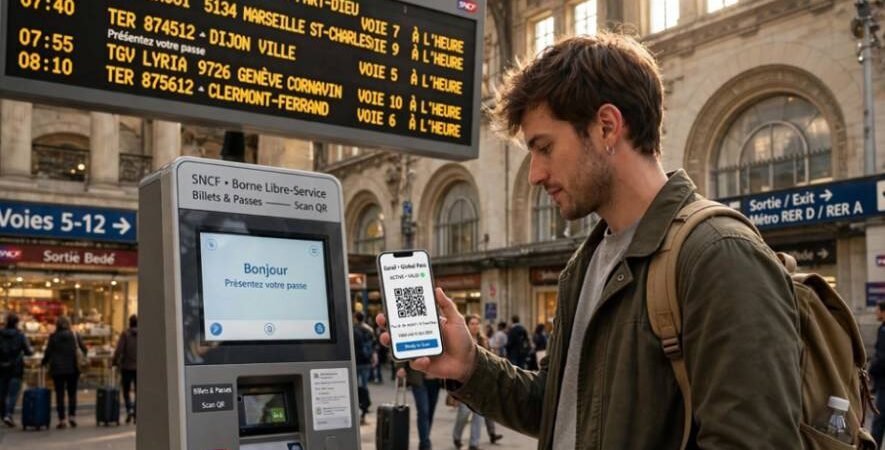
I learned how multi-country passes work the hard way at Gare de Lyon in Paris. Standing at an automated kiosk with my smartphone pass in hand, a conductor explained that my ticket covered the track, but not the seat. That day cost me €35 extra on the spot. Finding the best multi country travel passes and how to use them is about understanding how digital passes mesh with carrier seat quotas and reservation networks across borders.
When you configure your trip correctly, a unified international pass eliminates ticket lines, grants spontaneous cross-border flexibility, and saves hundreds of dollars over dynamic last-minute rail tickets.
What Top Multi-Country Rail Passes Actually Offer
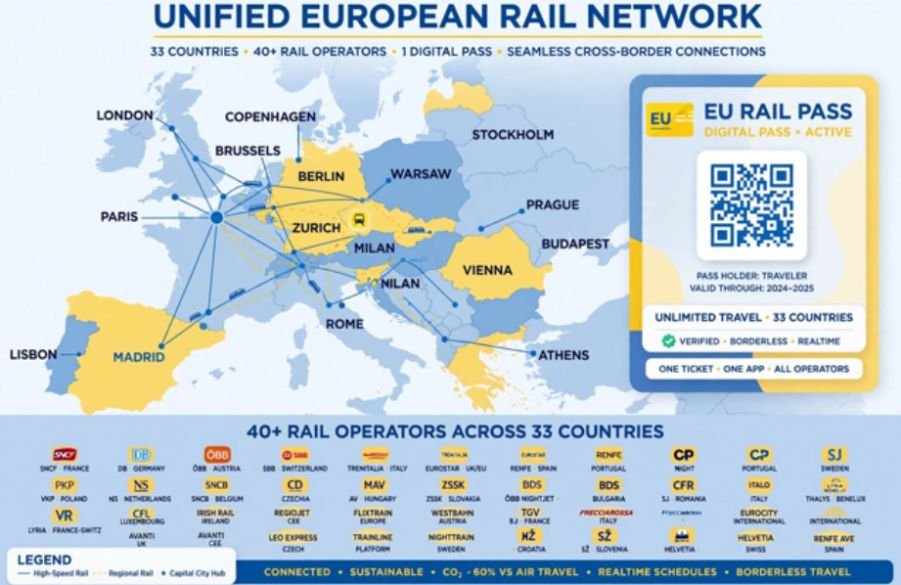
Cross-border transit passes group dozens of national operators under a single digital credential. In Europe, the network unifies 33 member nations and over 40 rail operators under a single system managed directly via the official Eurail and Interrail Official Portal.
If you want to expand your route toward budget friendly alternative destinations in Central and Eastern Europe, these networks unlock seamless travel between major capital hubs.
The Unified European Network: Continuous vs. Flexi
Choosing between pass structures comes down to your pace of travel. A Continuous Pass covers every single calendar day during its validity window, while a Flexi Pass allocates a set number of travel days within a one-month or two-month window.
| Pass Type | Best Travel Style | Validity Span | Standout Advantage |
| Continuous Global Pass | Fast-paced hops every 1–2 days | 15 days to 3 months | Zero daily travel limits |
| Flexi Global Pass | Deep exploration (3–4 days per city) | 4, 5, 7, 10, or 15 days in 1–2 months | Lower initial purchase price |
| Regional Multi-Country Pass | Focused geographic clusters | Fixed 3–8 days within 1 month | Tailored rates for compact regions |
Compact Cross-Border Regional Passes
You do not always need an all-access pass covering the entire continent. If your trip centers on a specific geographical triangle, regional options cut costs substantially:
- Benelux Pass: Covers national rail lines across Belgium, the Netherlands, and Luxembourg without requiring high-speed surcharges on standard InterCity routes.
- Scandinavia Pass: Unlocks connections between Denmark, Norway, and Sweden, including scenic regional routes like the Bergen Line.
The Step-by-Step Workflow: Activating and Logging Journeys
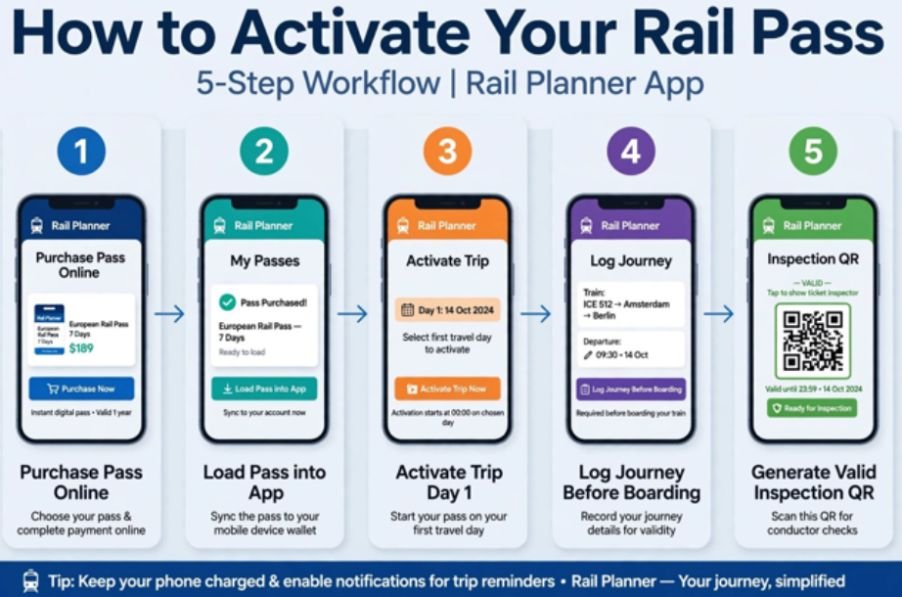
Modern international passes live inside mobile apps, specifically the Rail Planner application. Using them smoothly requires following an exact sequence before boarding.
[Purchase Pass Online] ➔ [Load Pass into App] ➔ [Activate Trip on Day 1] ➔ [Log Journey Before Boarding] ➔ [Generate Valid Inspection QR]
First, download your pass into the Rail Planner app using your confirmation code and passport number. Wait to activate the pass until your actual departure morning; activating early locks your travel window prematurely.
Second, search your departure station and destination in the app before stepping onto the platform. Add that train to your digital wallet. This specific step generates the active barcode that conductors scan. If an inspector scans a pass without that specific train logged, you face steep transit fines.
Learning how to navigate public transit in foreign countries without data helps here: download the offline timetable packages inside your transit app ahead of time so you can log trains even in tunnels or remote terminals.
The Hidden Cost Trap: Mandatory Seat Reservations
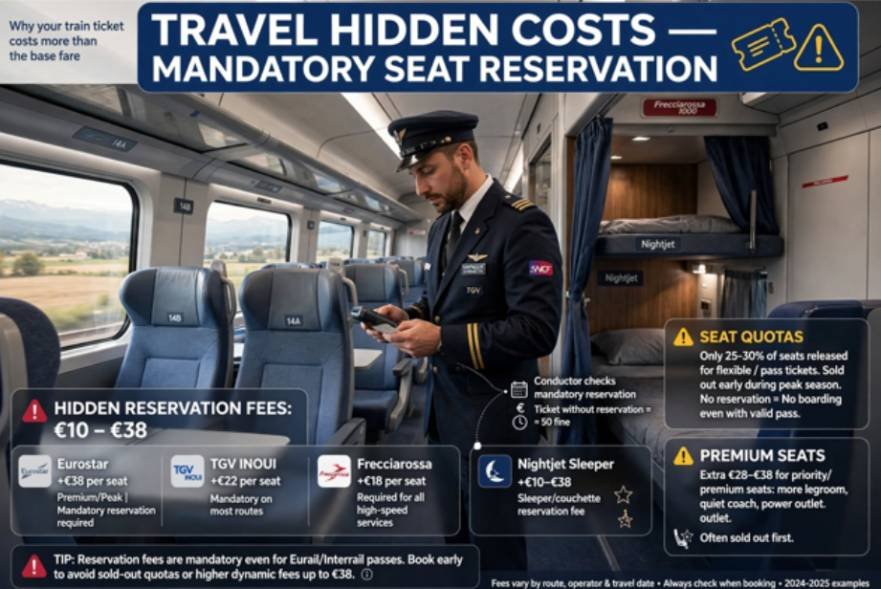
A common oversight for American travelers is assuming a global pass guarantees an open seat on premier express lines. A pass acts as your base fare ticket, but high-speed, international, and sleeper trains mandate a paid seat reservation. These seats pull from a limited inventory and sell out weeks ahead of time during peak summer seasons.
Authoritative schedules on Seat61 Rail Resource and booking interfaces on SNCF Connect show clear reservation requirements across major lines:
| Train Service | Primary Route Corridor | Mandatory Reservation Fee | Booking Window |
| Eurostar | London ⇄ Paris / Brussels / Amsterdam | €30 – €38 | Up to 6 months ahead |
| TGV INOUI / Lyria | Paris ⇄ Switzerland / Domestic France | €10 – €39 | Up to 3 months ahead |
| Frecciarossa | Rome ⇄ Florence ⇄ Milan ⇄ Venice | €13 | Up to 6 months ahead |
| Nightjet Sleeper | Vienna / Berlin ⇄ Zurich / Rome / Paris | €14 (seat) to €140+ (private sleeper) | Up to 6 months ahead |
| German ICE / Regional | Berlin ⇄ Munich ⇄ Frankfurt | Optional (€3 – €6) | Day of departure |
You can book standalone seat reservations online through the SNCB International Passholder Portal or directly via the carrier reservation tools without purchasing a full-fare ticket.
Real-World Cost Breakdown: Pass vs. Point-to-Point Tickets
To test whether a pass pays off, I tracked actual expenses on a classic two-week summer route across Western Europe: London ➔ Paris ➔ Zurich ➔ Milan.
| Journey Leg | Last-Minute Point-to-Point Cost | Pass Day Equivalent + Mandatory Reservation | Net Savings with Pass |
| London to Paris (Eurostar) | €210 | €58 pass day + €32 reservation = €90 | €120 |
| Paris to Zurich (TGV Lyria) | €175 | €58 pass day + €29 reservation = €87 | €88 |
| Zurich to Milan (EuroCity) | €85 | €58 pass day + €13 reservation = €71 | €14 |
| Total Expense | €470 | €248 | €222 |
The multi-country pass delivered €222 in savings on high-demand segments, even after paying every seat surcharge.
Pack the Pass, Skip the Drama
A multi-country pass remains one of the best tools for independent international exploration, provided you treat seat reservations as part of your initial planning rather than an afterthought. Balance fast premier trains with regional alternatives, keep your offline transit logs updated, and secure cross-border express slots early.
Frequently Asked Questions
1. Can I use my multi-country pass on local subways and buses?
No, passes cover national and regional rail lines, not municipal metro systems, city buses, or trams.
2. How far ahead should I book Eurostar passholder seats?
Reserve your Eurostar seat two to three months ahead because carrier quotas for passholders sell out fast.
3. Does a travel pass cover overnight sleeper cabins?
The pass covers your transit fare, but you must pay an added reservation supplement for a couchette or sleeper compartment.
4. What happens if I board a high-speed train without a reservation?
Conductors issue penalty fares ranging from €50 to over €150, or they may remove you at the next stop.