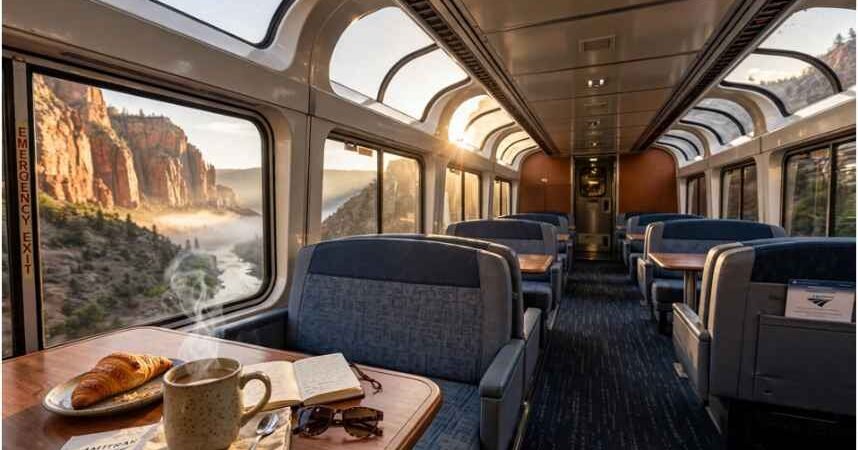
When I watched the dawn sun hit the orange sandstone walls of Byers Canyon from the glass lounge car, I realized something vital. Crossing America on steel rails is unlike driving or flying. Knowing how to plan a 3 week cross country train trip requires treating the journey as an evolving landscape rather than simple point-to-point transit. Twenty-one days gives you the ideal cadence to absorb cross-country rail travel, explore mountain towns, and navigate regional hubs without burning out.
Planning a nationwide rail expedition demands precision. I learned early that treating passenger rail like an airline schedule leads to missed connections, sore backs, and blown budgets. Here is how I organized my route, balanced comfort, and structured three full weeks on the tracks.
The Route Blueprint: Navigating the Chicago Pivot
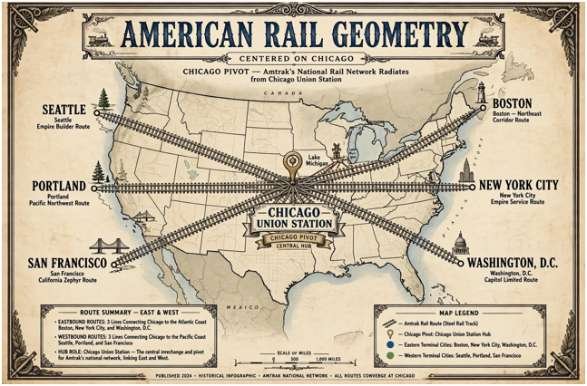
American rail geometry differs from Europe. The national rail network run by Amtrak operates on a spoke system centered squarely on the Midwest.
Why Chicago Dictates Your Entire Track Plan
Almost every transcontinental route runs through Chicago Union Station. Whether you depart from New York, Boston, or Washington, D.C., your train will terminate in Chicago. From there, long-distance Western routes fan out toward the Pacific.
I built a built-in 48-hour buffer in Chicago. This prevented missed connections and allowed me to explore the riverfront architecture before heading west into remote territory.
The California Zephyr vs. Empire Builder Decision
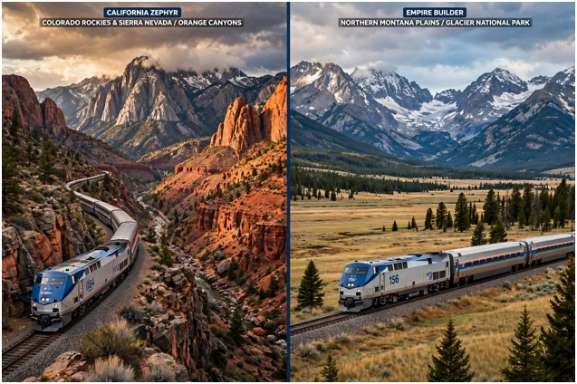
Your primary route choice comes down to two iconic tracks:
- The California Zephyr: Runs from Chicago to Emeryville (San Francisco Bay), cutting directly across the Colorado Rockies and the Sierra Nevada range.
- The Empire Builder: Skirts the northern border, tracing Montana’s plains and dropping passengers at the doorstep of Glacier National Park before terminating in Seattle or Portland.
For dramatic geology and elevation shifts, choose the California Zephyr.
The Hybrid Booking Strategy: Roomettes vs. Coach Seats
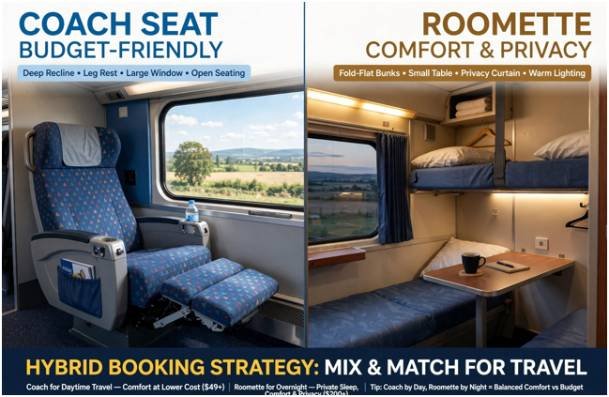
Accommodations dictate your energy levels. Sleeping upright in coach for multiple nights fragments rest, while booking sleeper cabins for the entire 21-day window can drain a budget.
Breaking Down the Real Cost of Sleep
I used a hybrid booking method:
- Daylight Segments (Coach): The seats recline deeply, feature extendable leg rests, and offer window views. I booked coach for daytime trips, such as the run between Denver and Glenwood Springs.
- Overnight Segments (Roomette): Booking a Roomette provides fold-flat bunks, access to dedicated showers, and all hot meals in the dining car.
This split approach kept my accommodations under $1,400 for all train segments combined while ensuring flat-bed sleep during overnight transit.
The USA Rail Pass Math Trap
The $499 USA Rail Pass provides 10 travel segments over 30 days. While cost-effective, it restricts you entirely to coach seating. Pass rules forbid paying cash differences to upgrade specific segments into sleeper cabins. If you want dedicated sleep on overnight sections, skip the multi-ride pass and book individual point-to-point tickets three to five months in advance.
My Tested 21-Day Cross-Country Rail Itinerary
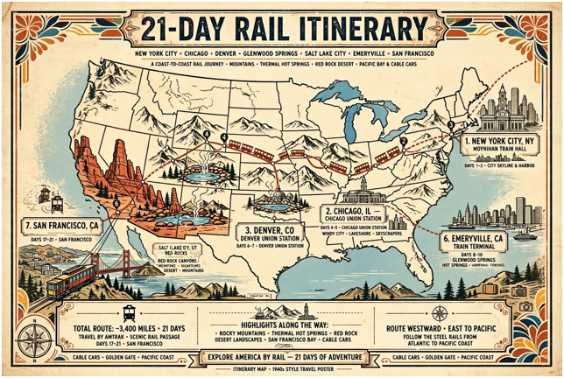
This three-week itinerary balances long-distance rail transit with multi-night stays in distinct geographic regions.
Week 1: East Coast Historic Hubs to the Midwest
- Days 1–2: Arrive in New York City. Explore Manhattan and stay central.
- Day 3: Board the Lake Shore Limited at Moynihan Train Hall in the afternoon, tracking the Hudson River Valley at sunset. Sleep aboard in a Roomette.
- Days 4–6: Arrive at Chicago Union Station mid-morning. Spend three days touring Millennium Park, visiting the Art Institute, and sampling deep-dish pizza.
Week 2: Crossing the Continental Divide
- Day 7: Board the westbound California Zephyr at 2:00 PM. Watch Illinois farmland yield to western plains before falling asleep in eastern Colorado.
- Days 8–10: Wake early as the train rolls into Denver Union Station. Use Denver as a launchpad for Rocky Mountain National Park excursions and city exploration.
- Days 11–13: Board the Zephyr for its most famous leg through the Moffat Tunnel and Gore Canyon. Step off at Glenwood Springs to soak in thermal mineral pools and hike the canyon trails.
Week 3: High Deserts, Sierra Summits, and the Pacific
- Days 14–16: Reboard through Utah’s red rock canyons into Salt Lake City. Spend two days visiting Antelope Island and exploring the Wasatch Range.
- Day 17: Catch the late-night Zephyr westward across the Great Basin.
- Days 18–20: Wake up climbing Donner Pass in the Sierra Nevada. Arrive in Emeryville by late afternoon and transfer across the bay into San Francisco. Spend three days visiting the Ferry Building, riding cable cars, and exploring coastal headlands.
- Day 21: Fly home from SFO.
Survival Realities: Packing and Freight Delays
Host railroads prioritize commercial cargo trains over passenger routes. According to performance metrics tracked by the Bureau of Transportation Statistics, long-distance rail corridors regularly encounter freight interference delays. Never schedule tight activities or flights within six hours of your scheduled train arrival.
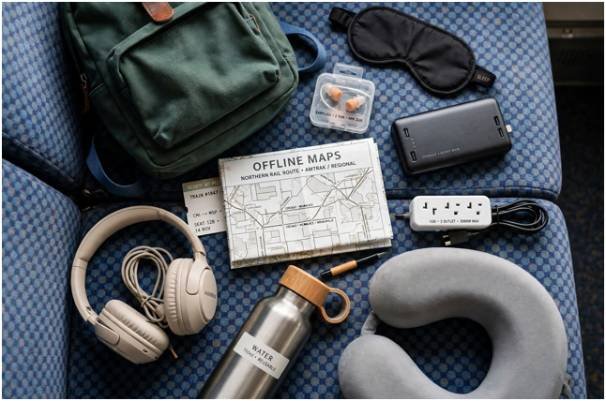
Pack an onboard daypack containing an eye mask, earplugs, an external power bank, and a compact power strip. Most cars have limited outlet placements. Download podcasts, audiobooks, and offline regional maps beforehand, because mobile signal drops out entirely in mountain gorges and western basins.
Frequently Asked Questions About Cross-Country Train Travel
1. How much does a 3-week cross-country train trip cost?
A hybrid trip pairing coach days with sleeper nights averages $2,200 to $3,800 per person, including trains, hotels, and food.
2. Can you shower on long-distance trains?
Yes, private sleeper car passengers share a dedicated shower down the hall, while coach passengers do not have shower access.
3. Is there reliable Wi-Fi onboard western Amtrak trains?
No, long-distance Western trains lack functional Wi-Fi, and cellular service frequently drops in mountain corridors.
4. How far ahead should I book cross-country train tickets?
Book your sleeper accommodations four to six months ahead, as roomettes on scenic routes like the California Zephyr sell out rapidly.
Steel Rails Beat Jet Trails
Forget checking airport departure screens and highway mile markers. Watching an entire continent rise from Midwestern cornfields into 10,000-foot granite peaks while sipping coffee is travel in its purest form. Pick your departure date, reserve those mountain-facing berths early, and experience the American landscape at ground level.