
Booking an excursion through an international reseller often means paying a 40% markup for a guide who receives minimum wage. Over a decade of independent overland travel taught me that learning how to find reliable local tour operators abroad keeps your dollars directly inside the host community while giving you an authentic, tailor-made journey.
Yet, bypassing corporate middle-tier brokers introduces real risks, from ghost operators to invalid insurance policies.
Vetting local partners requires a systematic approach. You must verify licenses, pressure-test communication speed, and analyze cancellation contracts before submitting payments.
Skip the Algorithmic Trap: Vetting Platforms vs. Going Direct
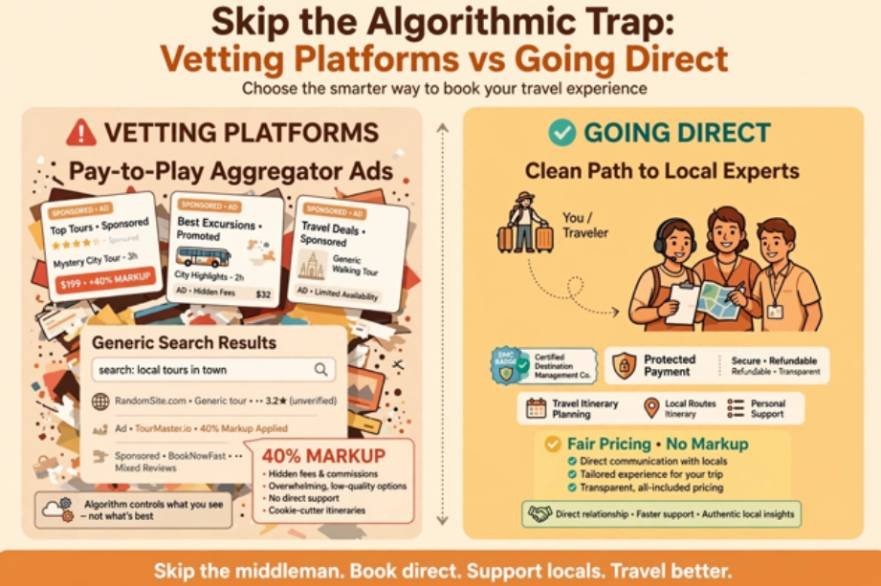
Searching for excursions on standard search engines usually pushes pay-to-play aggregators to the top. When I organize regional transitions alongside travel itinerary planning for multi stop trips, I bypass generic engine ads and start with curated supplier marketplaces.
These networks vet local partners and enforce minimum insurance standards while keeping financial transactions protected.
The Direct-to-Local Platform Landscape
| Platform | Best For | Vetting & Consumer Protection Model |
| TravelLocal | Bespoke multi-day tours | Connects travelers with established, locally owned destination management companies (DMCs); holds funds until service delivery. |
| ToursByLocals | Private, customizable day trips | Strict background screenings, identity checks, and dedicated 24/7 customer support backup. |
| Withlocals | Food walks & offbeat urban routes | Focuses on micro-entrepreneurs and non-commercial hosts; strict ethical tourism guidelines. |
If your trip strings together regional transit through multi country travel passes, booking directly with boutique local teams offers agility that massive corporate engines cannot match.
Run the Three-Point Legal and Insurance Audit
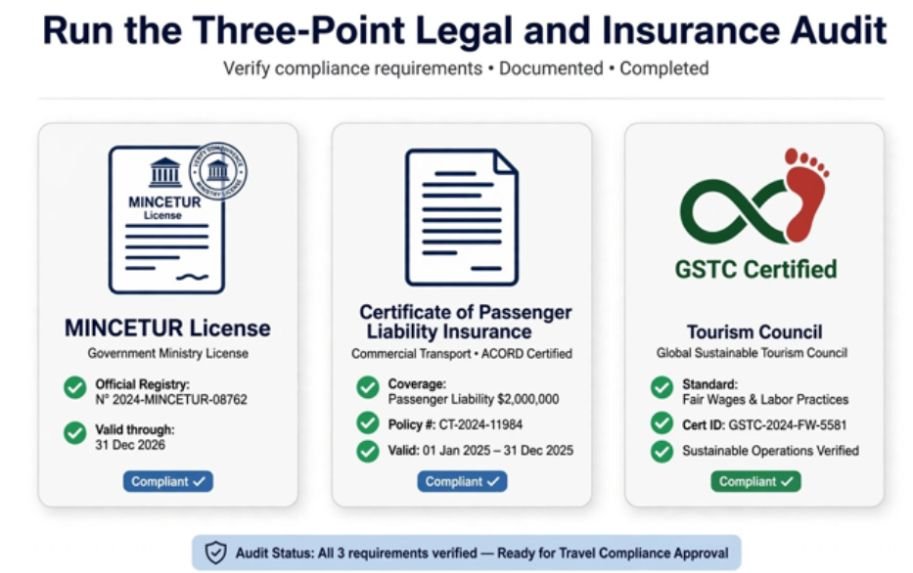
A legitimate operation does not hide behind an Instagram handle or an unlisted WhatsApp number. Before requesting an invoice, run their credentials through an objective regulatory audit.
Deciphering Ministry Licenses and Association Badges
Every country maintains an official oversight council for tourism. In Peru, for instance, legitimate operators must appear in the MINCETUR registry. In Kenya, look up their registration with the Tourism Regulatory Authority.
Legitimate operators also carry affiliations with established international bodies:
- National Oversight: Look for registrations with bodies like ASTA in the US or ABTA in the UK. These organizations require members to maintain strict professional codes of conduct.
- Commercial Transport Insurance: Ask for their Certificate of Passenger Liability Insurance. Many budget operators carry standard personal automotive policies that become invalid during commercial tourist operations.
- Sustainability Standards: Check if they align with criteria from the Global Sustainable Tourism Council to confirm fair wages and ethical employment for porters, drivers, and trackers.
Do not accept website badges at face value. Scammers copy and paste PNG logos onto landing pages. Verify the registration ID directly on the issuing association’s database.
The “First Contact” Stress Test: How to Audit Responses
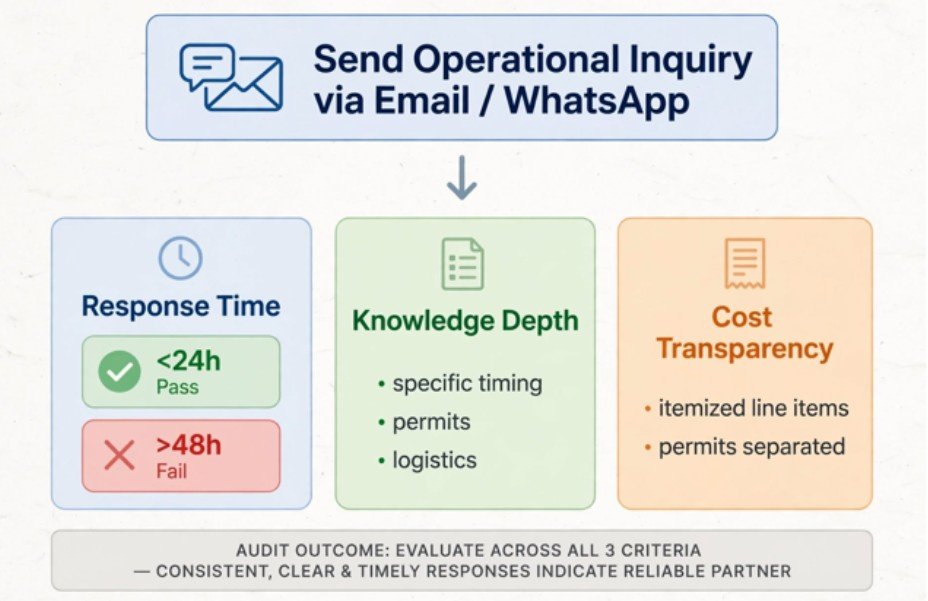
Test your operator with targeted inquiries before committing. Send a specific introductory inquiry and grade their reply against three distinct operational criteria.
[Send Operational Inquiry via Email / WhatsApp]
│
┌────────────────────┼────────────────────┐
▼ ▼ ▼
[Response Time] [Knowledge Depth] [Cost Transparency]
<24 Hours: Pass Specific timing, Itemized line items,
>48 Hours: Fail permits, logistics permits separated
First, check turnaround times. A responsive team replies within 24 hours, taking time-zone differences into account. Prolonged delays during the sales pitch usually foreshadow poor support during on-the-ground emergencies.
Second, test their on-the-ground knowledge with a hyper-specific question. Instead of asking, “Can we visit the canyon?” ask, “What time must we arrive at the checkpoint to clear the security queue before morning bus arrivals?” A genuine guide will cite specific transit times, crowd movements, and operational conditions.
Third, evaluate their pricing clarity. If their quote lists an ambiguous single figure without stating who covers park fees, fuel surcharges, road tolls, and meal allowances, pause the process. You need a transparent quote that isolates mandatory government fees from local service costs.
Cross-check client feedback on Tripadvisor forums, where seasoned travelers discuss hidden charges and fee disputes in unbiased discussion threads.
Contract Pitfalls: Deposits, Cancellations, and Hidden Costs
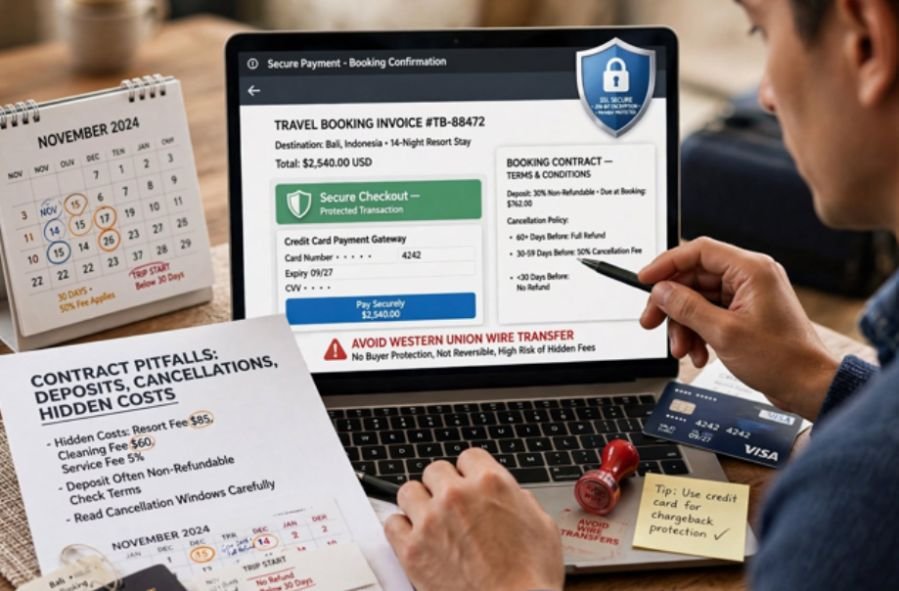
Never finalize a booking based on a casual text message. You need a formal invoice and signed booking contract detailing your payment path, reschedule rights, and liability terms.
Standard Refund Windows vs. Predatory Penalties
A fair contract accounts for non-refundable overhead while protecting the traveler’s cash balance. Compare your contract against these standard cancellation windows:
| Cancellation Timing | Fair Industry Standard | Red Flag Terms |
| 60+ Days Prior | Full refund minus a modest administrative fee ($50–$100) | Forfeiture of 50%–100% of the entire tour cost |
| 31–60 Days Prior | Forfeiture of initial deposit (typically 10%–25%) | Total forfeiture with no rescheduling options |
| 15–30 Days Prior | 50% refund of total trip invoice | Refusal to apply funds to alternate dates |
| Under 14 Days | 75%–100% retention due to third-party lock-ins | Retaining funds when the operator cancels |
Demand clear language addressing operator-initiated cancellations. If an outfit cancels due to low vehicle occupancy or mechanical failures, your contract must guarantee an immediate 100% refund, not merely a future travel credit.
Refuse direct wire services like Western Union or peer-to-peer apps. Reputable agencies invoice through corporate credit card payment gateways, preserving your institutional chargeback rights if a supplier defaults.
Frequently Asked Questions
1. What is an acceptable deposit for a custom international tour?
Standard deposits range from 10% to 25%, with balances due 30 to 60 days before trip departure.
2. How do I confirm a tour company is legally licensed in another country?
Request their official government registration number and cross-reference it inside the destination country’s Ministry of Tourism database.
3. Is it safe to pay a local tour operator via international bank wire?
No, bank wires lack consumer protection; always use a credit card or a secure payment platform with chargeback rights.
4. What is the difference between a tour aggregator and a local tour operator?
An aggregator acts as a booking middleman, whereas a local tour operator owns the transport, hires the guides, and manages the field logistics.
Final Boarding Call: Trust Your Data Over Pretty Brochures
A polished website does not guarantee reliable logistics. Focus on paper trails: validated municipal licenses, commercial liability coverage, clear refund milestones, and secure merchant accounts. Do the upfront due diligence so you can explore abroad with complete peace of mind.