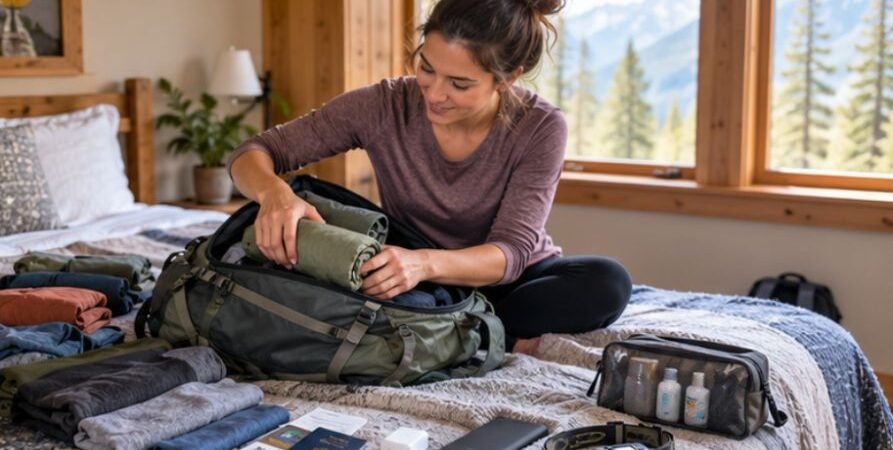
The biggest beginner packing mistake is not forgetting gear—it is carrying too much of the wrong gear. An overstuffed bag becomes harder to lift, slower to repack, and more tiring on trails, buses, airports, and campground walks. A practical adventure travel packing list for beginners should instead cover a few essential systems: clothing, footwear, hydration, navigation, weather protection, first aid, power, and emergency backup.
That approach mirrors the National Park Service’s Ten Essentials model, which organizes preparedness around navigation, sun protection, insulation, light, first aid, food, water, repair, fire, and emergency shelter.
Start With the Trip, Not the Backpack
Before buying gear, define four things: destination, activity, weather, and access to services.
Your choice should also account for your experience, fitness, and comfort with different activity levels, especially when considering adventure vacations for adults over 50.
A rafting weekend in West Virginia needs different footwear and waterproof storage than a desert hike in Arizona.
Checking regulations, hazards, weather, group ability, and local conditions before departure suggests Leave No Trace: Plan Ahead and Prepare A useful beginner test is simple: ask, “What problem does this solve?” If two items solve the same problem, keep the lighter or more versatile one unless redundancy is safety-critical.
The Beginner Packing System
For many short domestic trips without camping gear, a 30- to 40-liter backpack or compact duffel is a practical starting range, with a 15- to 20-liter daypack for hikes and daily outings.
“Before buying equipment, it is also worth considering the average cost of adventure travel so you can balance gear expenses with transportation, activities, and other trip costs.”
Winter clothing, climbing equipment, or multi-day food may require much more capacity.
| Packing system | Beginner essentials | Why it earns space |
| Clothing | 2–3 quick-dry tops, hiking pants/shorts, underwear, 3 pairs of wool or synthetic socks | Dries quickly and layers well |
| Warmth | Fleece or lightweight insulated jacket | Handles cold mornings and elevation changes |
| Weather | Waterproof rain shell | Blocks rain and wind |
| Footwear | Broken-in trail runners or hiking shoes; secure sandals if needed | Improves traction and reduces blister risk |
| Safety | First-aid kit, headlamp, whistle, emergency shelter | Covers minor injuries and delays |
| Hydration | Bottle or reservoir; treatment method where needed | Supports exertion and uncertain water access |
| Navigation | Offline map, physical map where useful, compass or GPS | Works when cell service fails |
| Electronics | Phone, cable, power bank | Supports maps, tickets, photos, and communication |
West Virginia University’s Adventure WV packing guidance also recommends sturdy footwear, synthetic socks and layers, plus a waterproof rain jacket. West Virginia University: Adventure Packing List Beginners rarely need exotic clothing; they need dependable layers that keep working when conditions change.
Dress in Systems, Not Outfits
Think in three layers. A base layer manages sweat, a mid-layer provides warmth, and an outer shell blocks rain and wind.
Synthetic fabrics and merino wool generally dry faster than cotton, making them better choices for strenuous, wet, or cold conditions. Cotton can still be comfortable for low-intensity sightseeing, but it should not be your only option outdoors.
Footwear: Comfort Beats Technical Looks
New boots are a poor experiment on a first adventure trip. Wear footwear that is already broken in and matched to the terrain.
If you are joining a beginner-focused tour, understanding the activity level and preparation involved in small group adventure tours for beginners can also help you choose appropriate footwear.
Trail runners or light hiking shoes often work well on maintained trails. Rough terrain, snow, heavy loads, or unstable surfaces may justify more supportive boots. For rafting or paddling, use footwear that stays secured to the foot; Adventure WV specifically recommends backstrap sandals, water shoes, or old sneakers for water activities.
Add blister treatment. A small hot spot can become the problem that ends a hike early.
Safety Gear Comes Before Convenience Gear
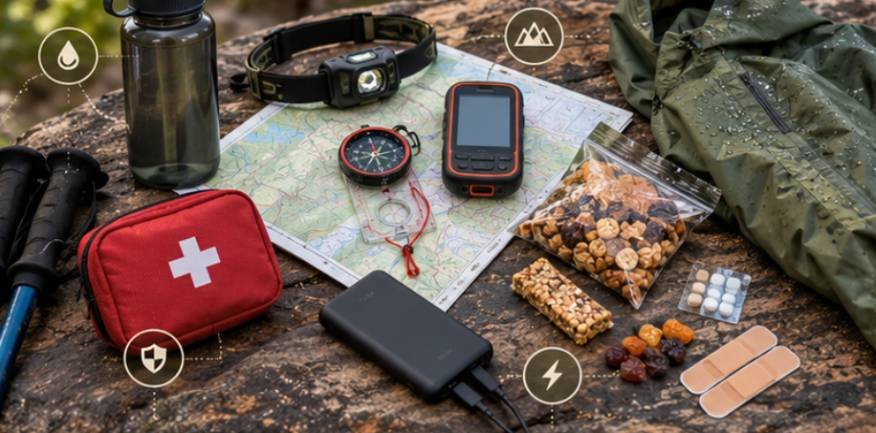
A headlamp is more reliable than depending on a phone flashlight because it keeps both hands free. Carry basic first-aid supplies for cuts, blisters, pain, and personal medical needs, and know how to use them.
The National Park Service advises carrying extra food, water, illumination, sun protection, repair tools, navigation, and emergency shelter because delays and sudden weather changes can turn a routine outing into an unplanned overnight situation.
Sun protection also belongs in the safety category. The CDC advises broad-spectrum sunscreen, protective clothing, a wide-brimmed hat, and sunglasses that block UVA and UVB rays.
Water, Food, and a Delay Margin
Do not pack water by habit alone. Consider temperature, altitude, exertion, route length, and refill options.
Carry enough for the planned outing plus a reasonable delay margin. If you expect to refill from natural sources, bring an appropriate treatment method and learn how to use it before leaving. The NPS also recommends identifying water availability before beginning an outdoor activity rather than assuming a stream or refill station will be available.
Electronics: The Airline Rule Beginners Miss
Phones now handle maps, reservations, cameras, and emergency contact, so a power bank is useful—but airline rules matter.
As of August 2026, the Federal Aviation Administration says spare lithium batteries and power banks must remain in carry-on baggage rather than checked luggage. Rechargeable batteries rated at 100 watt-hours or less are generally permitted, while batteries from 101 to 160 Wh typically require airline approval. Individual carriers can impose stricter limits.
Download maps and key reservations before leaving reliable service. The NPS also warns that a phone is not a replacement for essential outdoor safety equipment because reception and battery life can fail.
A 10-Minute Final Packing Check
The night before departure, lay everything out. Remove non-safety duplicates, then confirm that rain protection, insulation, first aid, water, navigation, snacks, and a headlamp are easy to reach.
Next, check weather and trail alerts, charge electronics, download offline maps, and tell someone your route and expected return time. Leave No Trace specifically recommends having an emergency communication plan and making sure someone knows where you are going and when you expect to return.
One more useful check: put on your loaded backpack and walk for 20 minutes. Climb stairs if possible. Gear that already feels unnecessarily heavy at home will feel worse after several miles.
What Beginners Commonly Overpack
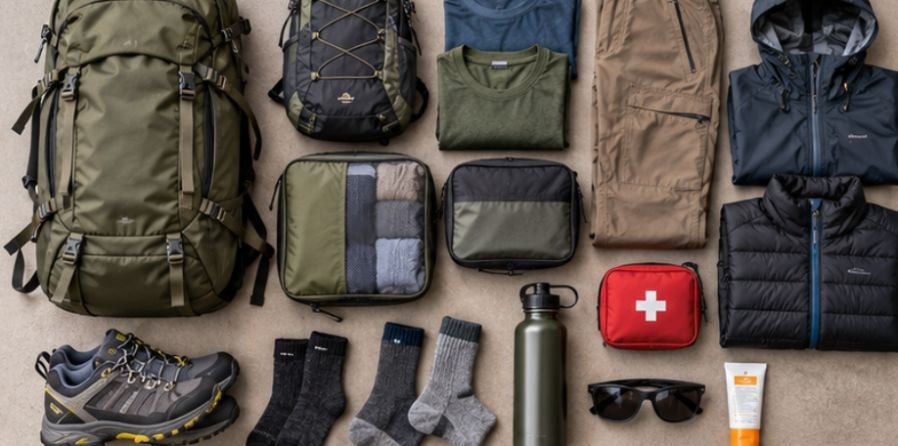
Extra shoes, full-size toiletries, too many casual outfits, and “just in case” electronics add weight quickly. Beginners often pack duplicates while forgetting risk-management gear such as a rain shell, headlamp, or backup navigation.
The best adventure travel packing list for beginners is not the longest list. It is the one matched to the actual trip.
Specialized adventures are an important exception. Climbing, backcountry skiing, canyoneering, paddling, winter travel, and overnight wilderness trips require activity-specific safety equipment that a general packing checklist cannot replace.
Frequently Asked Questions
1. What size backpack is best for a beginner adventure trip?
A 30- to 40-liter bag often works for short trips without camping gear. Colder weather, technical equipment, or multi-day food can require a larger pack.
2. Should beginners avoid cotton completely?
Not always. Cotton is fine for casual travel, but synthetic or merino layers are better for strenuous, wet, or cold outdoor activities because they dry faster.
3. Do I need hiking boots for every adventure trip?
No. Trail runners or hiking shoes may be enough on maintained trails. Boots are more useful with heavy loads, rough terrain, snow, or added support needs.
4. What should always stay in my daypack?
Carry water, navigation, sun protection, a rain layer, first aid, a headlamp, snacks, medication, and emergency signaling or communication gear appropriate to the location.
Pack for Problems, Not Possibilities
Good packing is less about preparing for every imaginable scenario than covering the problems that matter most: getting wet, cold, lost, thirsty, injured, delayed, or stuck without power. Start with those risks, then add comfort items only if space and weight allow.
Before your first trip, test-pack the bag and walk with it for 20 minutes. If it already feels awkward at home, it will not improve after hours of travel. A disciplined adventure travel packing list for beginners keeps essentials accessible, weight manageable, and your attention on the adventure rather than the pack.