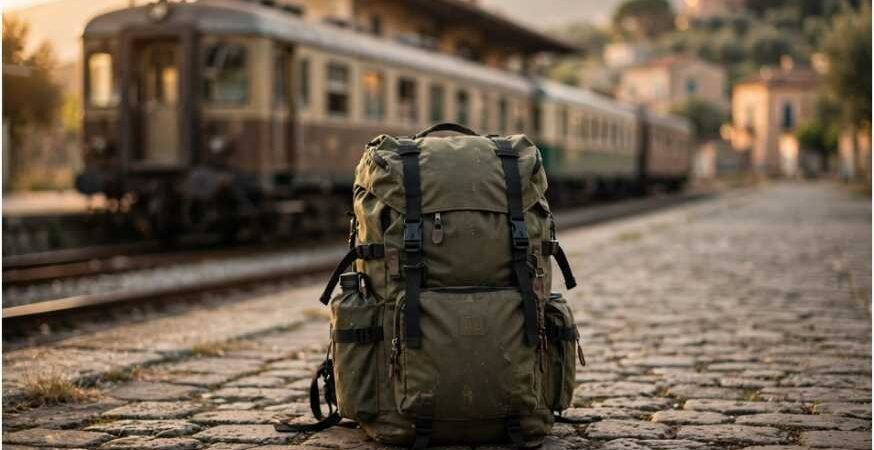
Three years into living out of a single bag across four continents, I learned a brutal lesson on a bumpy train platform in southern Italy: you do not pack for the trip you imagine; you pack for the friction you must endure. Living out of luggage for months turns small annoyances into chronic exhaustion.
This essential packing checklist for long term slow travel strips away vacation excess and leaves only what keeps you sane, productive, and mobile over months of continuous movement.
The Core Luggage Setup: Escaping the Overhead Bin Trap
Slow travel demands versatility. You drag your possessions through historic cobblestone streets, up four-floor walk-ups with no elevators, and across tight train corridors when you plan a 3 week cross country train trip.
A durable 40-liter backpack remains my baseline standard. Anything larger tempts overpacking; anything smaller sacrifices seasonal adaptability.
Why the 40L Backpack Beats Rolling Hard Shells
Wheeled luggage works wonders across flat terminal polished floors. Outside those terminals, wheels become liabilities.
A 40-liter backpack with stowable hip straps distributes weight onto your pelvic girdle rather than your shoulders. It fits inside international overhead bins, preserving carry-on status across major long-haul routes.
Keep total packed weight strictly under 9 kilograms (20 pounds). Many regional budget carriers enforce an uncompromising 7 kg (15.4 lb) ceiling, so keeping your core pack nimble avoids expensive surprise gate check fees.
Compression Cubes as Portable Dresser Drawers
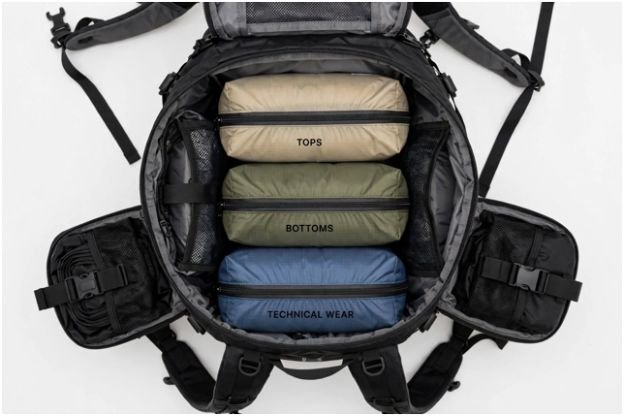
Living out of a bag becomes frustrating if you unpack everything to find clean socks. Double-zipper compression cubes act as removable drawers.
I assign one cube to tops, one to bottoms, and one to technical athletic wear. This organization lets me settle into a new rental within two minutes without scattering clothes across furniture.
The Remote Work Rig: Ergonomics and Redundancy
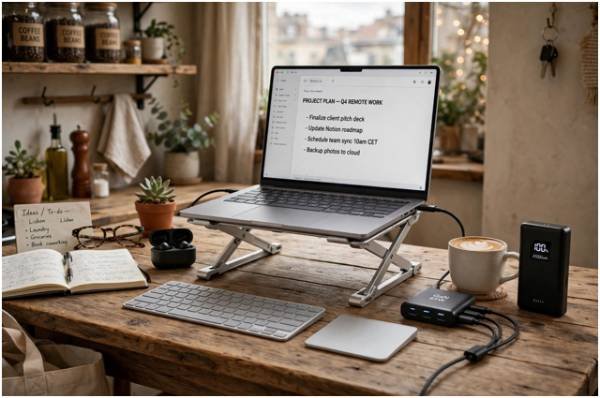
When travel serves as a lifestyle rather than a holiday, your workspace accompanies you everywhere. Poor desk ergonomics will trigger neck and spinal strain within your first month on makeshift apartment chairs.
Pack a collapsible Roost or Nexstand laptop riser alongside a slim wireless keyboard and trackpad. This three-piece kit lifts your screen to eye level and keeps wrists neutral on any kitchen table or coffee shop desk.
Power Management That Actually Works Globally
A single, high-output Gallium Nitride (GaN) charger (65W to 100W) replaces three separate OEM power bricks. Choose one with multiple USB-C ports to charge your phone, laptop, and noise-canceling headphones simultaneously.
Pair it with an external battery pack sized between 10,000mAh and 20,000mAh. Always review the FAA PackSafe Regulations to ensure your lithium-ion power banks remain inside your cabin baggage, as airlines ban them from checked cargo holds.
The Capsule Wardrobe: The 7-Day Laundry Loop
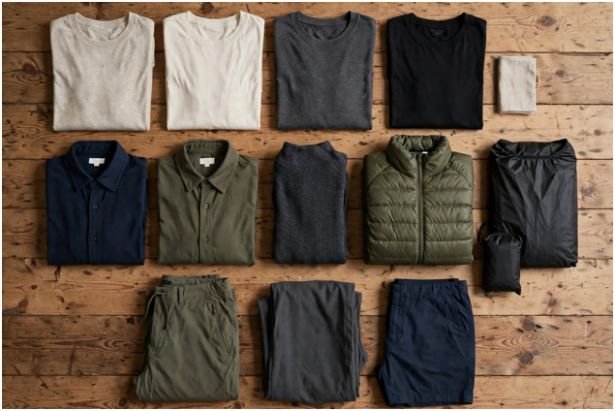
The biggest beginner error involves packing for 30 unique days. Slow travelers pack for seven days and rely on repetitive wash cycles.
My regular rotation consists of four neutral tees, two collared shirts, one thermal base, technical chinos, relaxed pants, one pair of shorts, a packable rain shell, and an ultra-light down jacket. I stick to a tight palette of charcoal, navy, black, and olive so every top pairs with every bottom.
Fabrics That Survive Heavy Rotation
Cotton fails during long-term movement; it holds moisture, takes two days to air-dry in humid rooms, and gathers odors quickly.
Instead, rely on ultra-fine Merino wool and high-gauge technical synthetics. Peer-reviewed textiles research hosted on ScienceDirect details how wool fibers naturally bind odor-causing volatile compounds inside their internal cortex, shedding them only during washing.
This lets you wear items multiple times before washing, which significantly cuts your laundry footprint while touring remote travel destinations.
Carry a pocket-sized elastic travel clothesline and a flat silicone drain stopper. Washing three undergarments in a bathroom sink takes four minutes and guarantees fresh clothing regardless of local laundromat availability.
Footwear Strategy: The Three-Pair Threshold
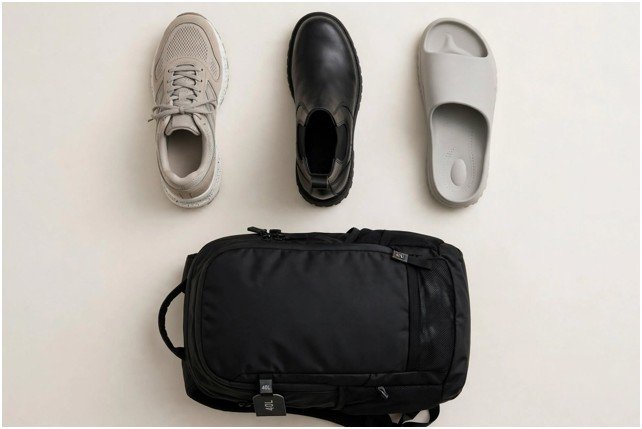
Shoes dominate physical space and add dense weight faster than any other category. Limit yourself strictly to three pairs:
A neutral walking trainer handles your 15,000 daily street steps. A waterproof Chelsea boot or minimalist leather shoe manages sudden downpours, cold snaps, and upscale dinner reservations. Finally, a pair of lightweight recovery slides or trail sandals covers beach days, tiled apartment floors, and shared showers.
Always wear the heaviest pair on travel days to keep your bag light and compact.
Health, Toiletries, and Border Protocol
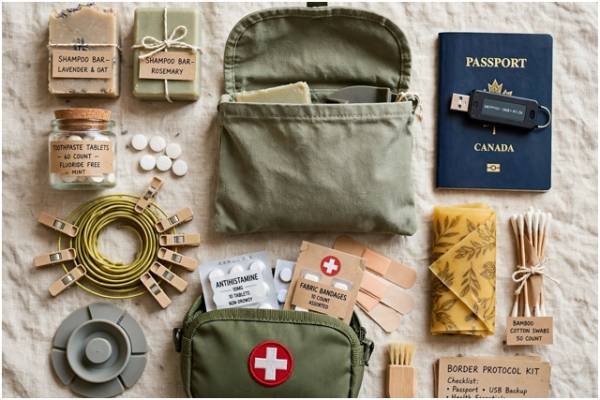
Carrying months of liquid shampoo through airport security checks is unnecessary when local grocery stores exist globally. Carry concentrated, solid equivalents for day-one arrivals.
Solid shampoo bars and concentrated toothpaste tablets save space and eliminate messy leaks inside your bag. Carry an emergency kit with antihistamines, broad-spectrum antibiotics, oral rehydration salts, and basic bandages. Always consult destination profiles on the CDC Travelers’ Health portal to secure required immunizations before entering foreign borders.
Secure digital copies of your passport, residency certificates, and insurance policies on an encrypted cloud folder, backed up to an offline thumb drive tucked into an obscure daypack pocket.
Stop Packing for “Just in Case” Scenarios
Here is the cardinal rule I share with new nomads: if a hypothetical item costs under twenty dollars and takes under twenty minutes to find in a mid-sized city, leave it at home.
Packing for rare emergencies turns your backpack into a heavy storage locker. You are moving across populated communities, not setting up an Arctic weather base. Keep your pack nimble, wash your clothes weekly, and buy seasonal items only when you need them.
Frequently Asked Questions
1. How many liters should a long-term slow travel backpack be?
A 40-liter backpack offers the optimal balance between overhead bin compliance and adequate long-term storage capacity.
2. How do you handle laundry during months of slow travel?
Pack a seven-day wardrobe, wash small essentials by hand in your bathroom sink, and use neighborhood laundromats weekly.
3. What is the maximum weight for a digital nomad carry-on?
Aim for 7 to 8 kilograms (15.4 to 17.6 lbs) to pass strict international airline gate scales safely.
4. How do I manage winter clothes while moving through changing seasons?
Layer a packable down jacket under a windproof rain shell instead of hauling heavy, rigid winter coats.