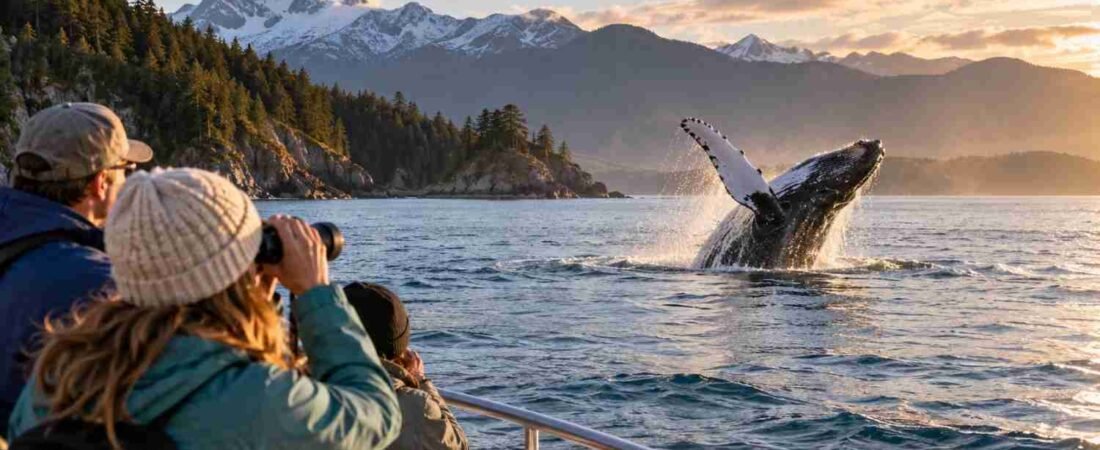
I’ve noticed that the most memorable whale encounters are not always the closest ones. On a good trip, the boat can sit quietly while a whale surfaces, disappears, and returns on its own terms. That distance can feel rewarding because the experience stays focused on watching wild behavior rather than manufacturing a perfect tourist moment.
I’ve also learned that the character of a whale-watching trip is shaped long before the boat reaches open water. The operator’s policies, crew training, vessel habits, and attitude toward photography all matter. If a company treats whales as wildlife first and attractions second, passengers usually get a different experience.
What Makes a Whale-Watching Experience Ethical?
Ethical whale watching starts with one simple principle: the animal should not have to change its behavior to entertain people. Responsible crews give whales space, avoid pursuit, and allow encounters to unfold naturally. In US waters, NOAA Fisheries generally recommends staying at least 100 yards from large whales, while some species and locations require greater distances. Viewing time should also be limited because repeated vessel presence can create cumulative disturbance.
That means a responsible captain may turn away even when passengers want a closer look. The decision can seem disappointing for a moment, but it shows that the crew understands the difference between observing wildlife and interfering with it.
Check the Operator Before You Book
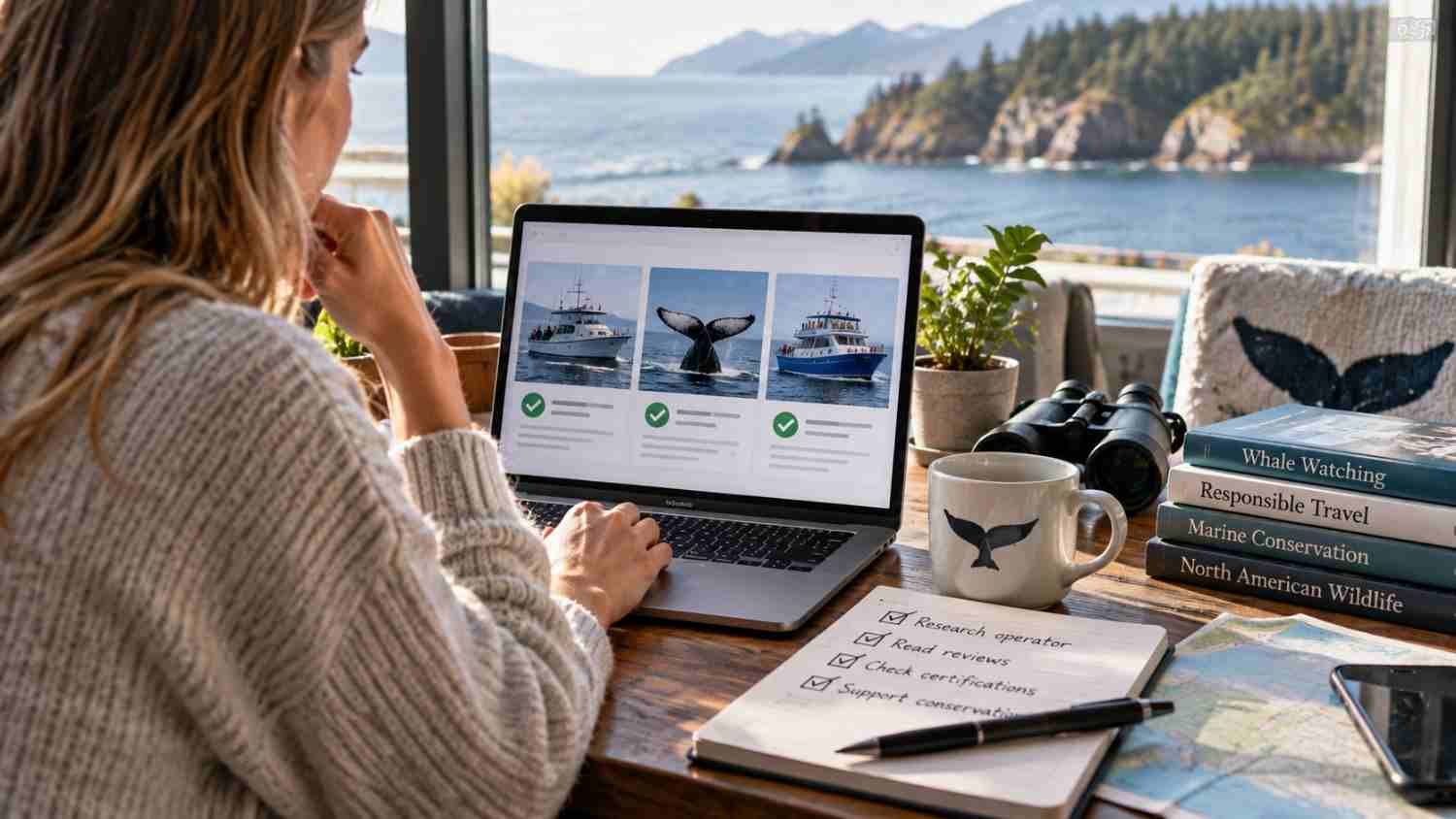
A company’s website can reveal plenty before you pay for a ticket. Look for clear wildlife-viewing policies, trained naturalists, explanations of local regulations, and language about conservation. Be cautious of marketing built around guaranteed close encounters, touching animals, feeding wildlife, or chasing particular whales.
The strongest operators also explain what happens when conditions are poor, or whales are farther away than expected. Good wildlife tourism does not need to promise a dramatic breach every time. It can deliver value through interpretation, patience, species identification, habitat knowledge, and an honest explanation of what passengers are seeing.
Some operators also participate in research, photo-identification projects, or sighting networks. Those activities can turn a recreational trip into a useful source of observations, although participation alone does not automatically prove that every aspect of an operation is responsible.
Let the Whales Set the Pace
Boat behavior matters just as much as distance. NOAA guidance advises vessels not to chase, encircle, leapfrog, or trap marine mammals between boats and shore. Captains should avoid sudden changes in speed or direction and reduce speed when whales are nearby.
Passengers can help by accepting that a whale may surface somewhere unexpected. If a whale approaches a stationary boat, the responsible response is not to accelerate toward it. Depending on local rules and conditions, the crew may remain neutral or slowly move away. The goal is to avoid creating a situation where the animal has to dodge a vessel.
Extra care matters around calves. A mother may alter her movements when boats crowd an area, so an operator that gives family groups a wide berth is showing practical respect rather than missing an opportunity.
Choose Conservation Over a Perfect Photo
Photography can improve a whale-watching experience when it encourages patience rather than pursuit. A telephoto lens or binoculars can provide detail without requiring a boat to move closer. The best photograph may be the one that records a whale behaving normally, not the one that shows the closest possible encounter.
This is also where how photographers avoid disturbing wildlife becomes relevant. Staying patient, keeping equipment ready before the animal surfaces, and following the crew’s positioning instructions can reduce pressure to maneuver for a better angle. A responsible photographer also understands that a blurry tail, distant blow, or ordinary surfacing can still be a valuable record.
Think Beyond the Boat

Ethical whale watching connects with a much larger conservation picture. Whales face pressures that include vessel strikes, fishing-gear entanglement, pollution, underwater noise, and changing ocean conditions. A thoughtful tour can help passengers understand those pressures without turning conservation into a sales pitch.
The connection becomes even more meaningful when travelers understand wildlife adapting to changing ecosystems. Shifts in prey, water temperature, migration timing, and habitat use can affect where whales appear and how they behave. A naturalist who explains those changes helps passengers see an encounter as part of a living ecosystem rather than a scheduled attraction.
Responsible tourism can also support coastal communities. Local guides, boat crews, researchers, harbor businesses, and conservation programs can all benefit when visitors choose operators that value long-term stewardship.
Small Choices Make a Better Encounter
Passengers have responsibilities too. Follow crew instructions, keep voices reasonable when animals are nearby, never feed or attempt to touch wildlife, and respect local viewing rules. If several boats are already surrounding whales, a good operator should avoid adding unnecessary pressure.
It is also worth checking the environmental footprint of the trip. Fuel efficiency, vessel maintenance, waste reduction, and quieter operating practices can all matter. Alternative fuels may reduce some emissions, but fuel type alone should not become the only measure of sustainability. The operator’s overall wildlife policy and vessel practices deserve attention.
FAQs: Ethical Whale Watching Experiences Worth Seeking Out
1. How far away should a whale-watching boat stay?
In the US, NOAA generally recommends at least 100 yards from large whales, but species-specific and regional rules can require more distance.
2. Should I choose a tour that guarantees whale sightings?
A guarantee can be appealing, but responsible operators cannot control wild animals. Look for companies that explain their wildlife policies instead of promising unusually close encounters.
3. Can whale watching support conservation?
It can. Education, research partnerships, sighting reports, and visitor spending can contribute to conservation, although the impact depends on how an operator runs its program.
4. What should I do if another boat gets too close?
Follow your crew’s instructions and avoid encouraging the behavior. If appropriate, record the location and report suspected violations through the relevant local or federal wildlife authority.
The Experience Worth Taking Home
The most meaningful whale-watching trip may leave you with fewer dramatic photographs and a better understanding of what you actually witnessed. When a crew respects distance, reads animal behavior, and accepts that whales control the encounter, passengers become observers instead of participants in a chase. That shift changes the entire atmosphere on the water.
A whale does not need to perform for the trip to matter. Sometimes watching quietly is the most respectful experience you can take home.