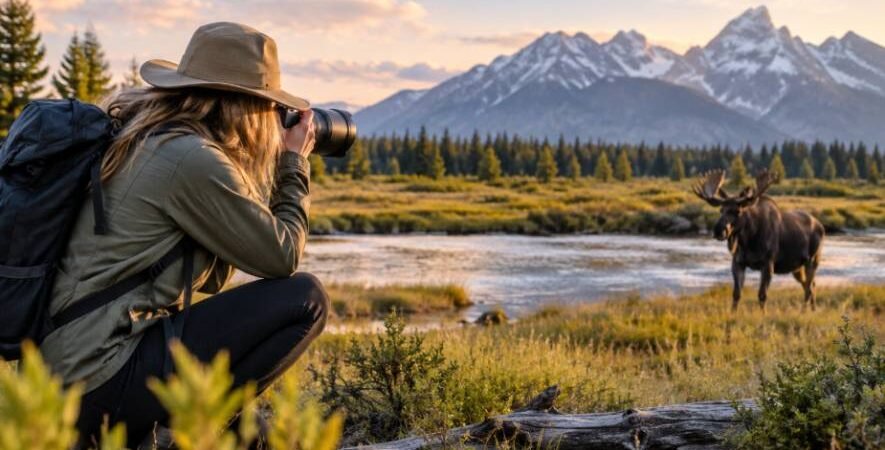
I used to think the best wildlife photographs came from getting as close as possible. A closer subject can reveal incredible detail, but I realized that memorable encounters often happen when I stop trying to control the scene.
An animal that stops feeding, changes direction, watches you closely, or leaves a resting spot is already giving you useful information. Responsible ways to photograph wildlife while traveling start with noticing those signals and accepting that sometimes the right photograph is the one you choose not to take.
Give Wildlife Enough Space
Distance is one of the simplest ways to reduce disturbance. There is no single distance that works for every species or location, so check local rules before heading out. National parks can have specific minimum distances, particularly around predators, nesting colonies, or other sensitive wildlife. If an animal reacts to your presence, increase the distance rather than waiting to see what happens.
A telephoto lens makes this much easier. You can frame an animal tightly while remaining far enough away for normal behavior to continue. Binoculars can also help you observe before deciding whether a photograph is worth pursuing. The goal is to photograph an animal that still feels free to behave naturally.
Learn to Read Behavior
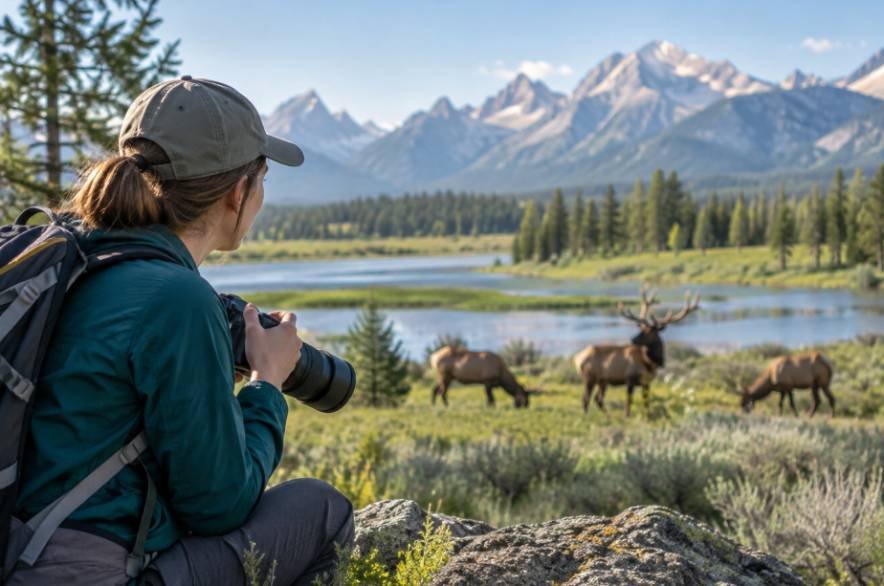
Instead, photographers have to learn the quieter signs. A bird may freeze, change posture, repeatedly watch the photographer, or suddenly fly away. A mammal may stop feeding, alter its route, become alert, or move away. Those reactions matter even without obvious distress.
Breeding and nesting periods deserve extra caution. Approaching a nest can keep adults from feeding young, expose eggs or chicks to weather, or make a nest easier for predators to find. Do not move branches, leaves, rocks, or other natural materials to improve the composition. Habitat protection is part of the photograph, even when the habitat occupies only a small corner of the frame.
Never Feed, Bait, or Chase
Feeding can alter natural behavior and make animals associate people with food. Wildlife accustomed to people can also create safety problems.
Baiting predators or using food to stage an action photograph crosses an even clearer ethical line. These tactics can interrupt natural behavior to create a dramatic frame.
Playback deserves similar caution. Playing bird calls may draw an individual away from a nest or provoke territorial behavior. If an animal reacts to something you created, the image is shaped by human interference.
Let the Habitat Stay Untouched
A clearer photograph is never a good reason to remodel the scene. Cutting vegetation, moving logs, shifting rocks, or trampling plants can destroy shelter and camouflage that an animal depends on.
This becomes especially serious around nests and dens. What looks like an inconvenient branch to a photographer may be protection from weather or predators. Stay on designated trails where required, and use your position, lens choice, and patience to solve composition problems instead of physically changing the environment.
Working with the landscape can also improve your photography, encouraging wider compositions, natural framing, and images that show an animal within its real environment.
Use Equipment Carefully
The equipment you carry can make ethical choices easier. A long lens lets you maintain distance, while a monopod can help with heavier lenses without requiring you to move closer.
Flash deserves particular care. Avoid using it on nocturnal wildlife, especially owls, because sudden light can interfere with their ability to navigate or hunt.
Drones require more caution. They can disturb birds and other wildlife, particularly near nests, and their use may be prohibited in protected areas. Check the rules before flying rather than assuming a quiet drone is harmless.
Research Before You Travel
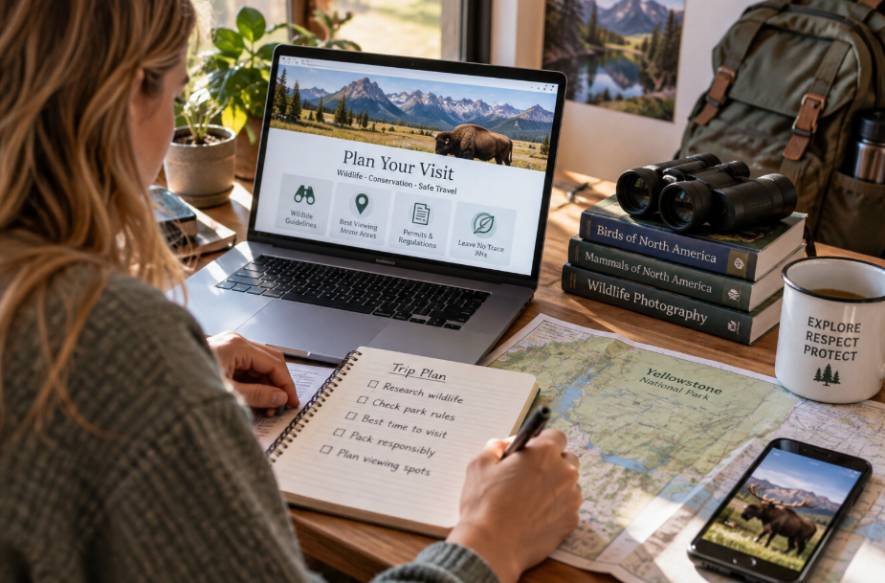
Responsible photography begins before the trip. Look up park regulations, seasonal closures, wildlife-distance requirements, and permit rules that apply to your destination. If you hire a guide, ask how the operator handles animal encounters. A responsible guide should be willing to leave an animal alone when the situation calls for it.
When choosing wildlife experiences, look for operators that prioritize natural behavior, habitat protection, and conservation rather than guaranteed close encounters. Experiences connected with wildlife tourism that supports conservation can show how responsible tourism can contribute to protecting the places you came to photograph.
Your choices also affect local people. Follow access rules, respect private property, hire legitimate local guides, and support community-based businesses. That is where wildlife tourism supporting local communities becomes part of responsible photography rather than a separate idea.
Think Before You Share the Photograph
The ethical decision does not always end when you press the shutter. Be accurate about how the photograph was made, especially if an image was captured in captivity or under controlled conditions. Honest captions help viewers understand what they are seeing.
Location sharing also deserves thought. Posting an exact GPS location for a rare animal can attract visitors to a sensitive site. For vulnerable species, leaving precise coordinates out of public posts may protect the animal and habitat from sudden attention.
Do not let social media turn wildlife photography into a race for increasingly close or unusual images. A technically impressive photograph can still represent a poor encounter.
Frequently Asked Questions
1. How far should I stay from wildlife while photographing it?
Follow local rules first. If an animal changes its behavior because of you, move farther away. A telephoto lens helps you keep distance while maintaining useful framing.
2. Is it okay to use flash for wildlife photography?
Flash should be used sparingly. Avoid it with nocturnal animals, and rely on natural light or camera settings whenever practical.
3. Can I use food to attract wildlife for a photograph?
No. Feeding or baiting can change natural behavior and create risks for animals and people. Photograph wildlife where you find it instead.
4. Should I share the exact location of a rare animal?
Think carefully before posting precise coordinates. Publicizing sensitive locations can attract crowds and increase pressure on vulnerable animals or habitats.
Why Patience Makes Better Wildlife Photography
The most useful shift is simple: stop treating the animal as a subject that owes you a photograph. Watch first, keep your distance, and let the encounter develop without interference. Patience gives wildlife room to behave naturally, and it gives you time to notice moments that would be missed while chasing a tighter frame. It also changes the way travel photography feels. Instead of measuring a successful outing by how close you got, you start measuring it by how respectfully you experienced the place.
That restraint often produces photographs that feel more honest, surprising, and connected to place.
A great wildlife photograph should leave the animal exactly where you found it: wild, undisturbed, and free to disappear.