America’s national parks recorded more than 323 million recreation visits in 2025, according to the National Park Service. Yet visitor pressure is anything but evenly distributed. North Cascades National Park, for example, recorded just 46,925 recreation visits that year, while individual trails inside the park can still become crowded and environmentally stressed.
That contrast reveals something important about sustainable hiking trips in the US: simply choosing an obscure destination is not enough. A responsible hiking trip also depends on where you walk, when you arrive, how the trail is managed, and what you do once your boots hit the ground.
What Actually Makes a Hiking Trip Sustainable?
Sustainable hiking is less about buying recycled gear and more about reducing pressure on the landscape.
The National Park Service describes sustainable trails as routes designed and managed around the land’s physical ability to support visitor use. Drainage, trail alignment, durable tread surfaces, and routing hikers away from fragile habitat can all reduce erosion and vegetation damage.
That means a well-maintained trail receiving moderate traffic can sometimes be a more responsible choice than an unofficial path through an apparently empty wilderness.
A good trip therefore balances four factors: environmentally durable trails, appropriate visitor numbers, responsible transportation and lodging choices, and strict low-impact environmental behavior.
Five US Hiking Destinations Worth Considering
| Destination | Why It Works for a Lower-Impact Trip | Best Experience | Key Consideration |
| Jedediah Smith Wilderness, Wyoming | Large wilderness landscape adjoining the Tetons | Multi-day mountain hiking | Bear-country precautions |
| Bears Ears National Monument, Utah | Strong cultural-resource protection practices | Desert hiking and archaeology | Permits and fragile sites |
| North Cascades, Washington | Vast alpine wilderness with relatively low overall visitation | Alpine day hikes and backpacking | Popular trails still get busy |
| Usery Mountain, Arizona | Established desert trails and ranger education | Short desert hiking trips | Extreme heat |
| Batona Trail, New Jersey | Long established route through protected Pine Barrens | Short thru-hiking | Seasonal insects and wet sections |
Jedediah Smith Wilderness: A Quieter Side of the Tetons
The western side of the Teton Range offers a very different experience from heavily photographed roadside viewpoints in Grand Teton National Park.
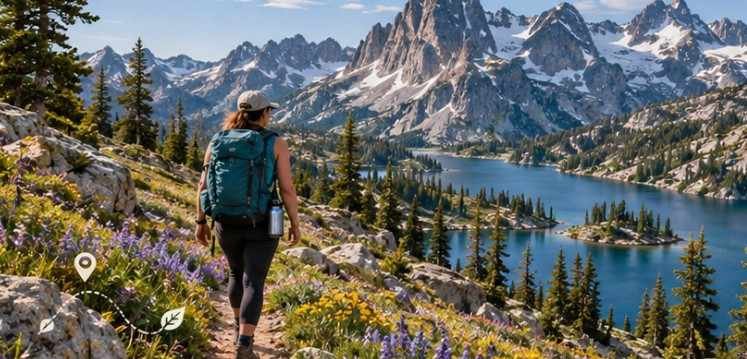
USDA Forest Service records list Jedediah Smith Wilderness at roughly 123,000 acres. The landscape includes alpine terrain, forest, wildflower meadows and routes connecting with the Teton Crest Trail.
For experienced hikers, routes around Green Lakes and Granite Basin can provide a wilderness-focused alternative to concentrating another trip around the busiest national-park corridors.
This is serious bear country, however. Food storage requirements, changing mountain weather and wilderness navigation should shape the itinerary.
Bears Ears: Sustainability Includes Cultural Respect
Environmental impact is only part of responsible travel. Bears Ears National Monument demonstrates why protecting cultural landscapes matters just as much.
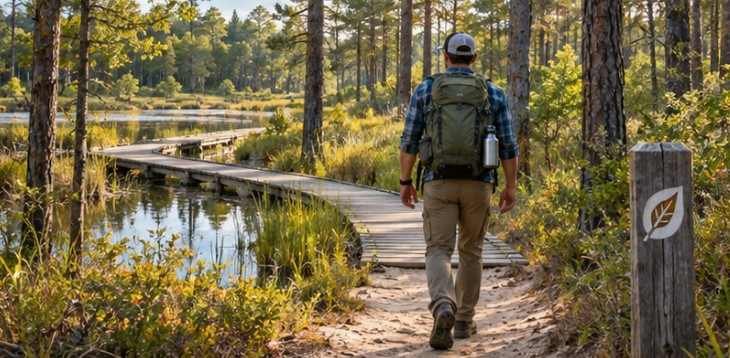
Bears Ears visitor guidance requires permits or passes for several activities around Cedar Mesa and other monument areas. Visitors are also asked not to touch rock imagery, enter or lean against archaeological structures, remove artifacts, or casually publish precise locations of sensitive sites.
Even desert soil demands caution. Biological soil crust can take decades to recover after being stepped on. Staying on established routes is therefore far more important than finding your own seemingly harmless shortcut.
North Cascades: Low Park Visitation Does Not Mean Empty Trails
North Cascades makes an excellent case study in responsible trip planning. The park recorded fewer than 47,000 recreation visits in 2025, but Cascade Pass remains its most popular day hike. NPS warns that its subalpine vegetation is fragile and asks hikers to rest only on durable surfaces such as rocks, snow or the established trail. It’s also perfect for tourists looking for e-bike adventure destinations.
Cascade Pass is 3.7 miles one way with about 1,700 feet of climbing; continuing toward Sahale Glacier increases the one-way journey to 5.9 miles and roughly 3,940 feet of elevation gain. The lesson is useful elsewhere: check the specific trail, not merely annual park visitation numbers.
Usery Mountain: A Manageable Desert Alternative
Near Mesa, Arizona, Usery Mountain Regional Park provides more than 34 miles of established hiking, biking and equestrian routes, ranging from short walks to the 7.1-mile Pass Mountain Trail.
Its developed trail network makes it easier to remain on durable routes rather than creating social trails across sensitive Sonoran Desert terrain. Ranger-led programs also introduce visitors to desert wildlife and ecology.
The limitation is climate. A sustainable itinerary is not sensible if it puts hikers or rescuers at unnecessary risk. Summer programs may be canceled during extreme heat, making fall through spring a better planning window.
Batona Trail: Think Beyond the Western National Parks
Sustainable outdoor travel does not have to involve flying across the country to a marquee mountain landscape.
New Jersey Batona Trail information runs approximately 53 miles through Bass River, Wharton and Brendan T. Byrne State Forests in the Pine Barrens. State records note that volunteer trail crews regularly maintain its markings and corridor.
That makes the route especially attractive for East Coast hikers interested in a short thru-hike without adding a long-distance flight to the trip’s footprint.
Use This Five-Question Test Before Booking
Before choosing among sustainable hiking trips in the US, I would run the itinerary through five simple questions:
- Can I reach the destination without an unnecessary flight? A regional trip may outperform a distant “eco-destination” once transportation is considered.
- Am I using official trails? Established routes concentrate foot traffic and usually include drainage or erosion-control measures.
- Am I visiting during peak pressure? Weekdays, shoulder seasons and alternative trailheads can distribute use more effectively.
- Are reservations or permits required? Quotas are often conservation tools, not bureaucratic inconveniences.
- Does the destination have special ecological or cultural rules? Desert crust, alpine vegetation, archaeological sites and nesting areas require different behavior.
This test also exposes a common misconception: unpopular does not automatically mean sustainable. Sending increasing numbers of hikers toward an undeveloped area can simply move environmental damage somewhere new.
Leave No Trace Goes Beyond Picking Up Wrappers
Packing out trash is essential, but food waste counts too. For remote travel destinations with crowds, Leave No Trace guidance says hikers should remove leftover food and scraps rather than assuming organic material will disappear harmlessly. Visitors should also stay on durable surfaces, leave natural and cultural objects where they find them, avoid feeding wildlife and minimize fire impacts.
Reusable bottles, water filters and refillable food containers can reduce disposable packaging, but good behavior matters more than purchasing specialized “green” equipment.
Frequently Asked Questions
1. What is the most sustainable way to plan a hiking vacation?
Choose a destination close to home when practical, travel outside peak periods, use established trails, follow permit systems and spend money with locally owned accommodations and services.
2. Are less-visited national parks always more sustainable?
No. Visitor impact can concentrate on one trail even in a lightly visited park. Check current trail conditions, closures and land-manager recommendations before choosing a route.
3. Why do hiking permits help the environment?
Quota permits allow managers to control overnight or daily use in sensitive areas, reducing campsite expansion, vegetation damage, sanitation problems and crowding.
4. Should I avoid popular hiking destinations completely?
Not necessarily. Durable, professionally maintained trails may handle visitors better than fragile undeveloped areas. Visiting on weekdays or during shoulder seasons can further reduce concentrated pressure.
A Better Way to Measure a Hiking Trip
The greenest hiking vacation is not necessarily the one with the most remote trailhead or the strongest sustainability marketing. It is the one that matches visitor use to what the landscape can actually tolerate.
That may mean hiking the Pine Barrens instead of flying west, respecting a permit quota in Utah, or choosing an established route instead of cutting across an alpine meadow. The best sustainable hiking trips in the US leave the trail, wildlife and cultural landscape capable of giving the next hiker essentially the same experience you received.