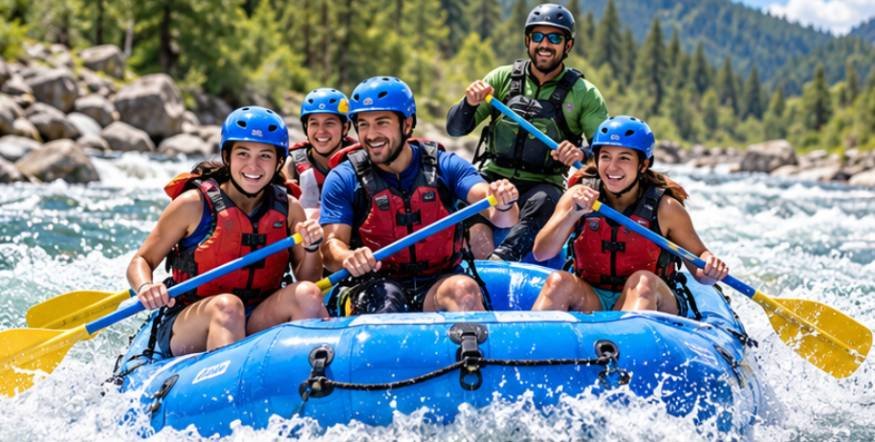
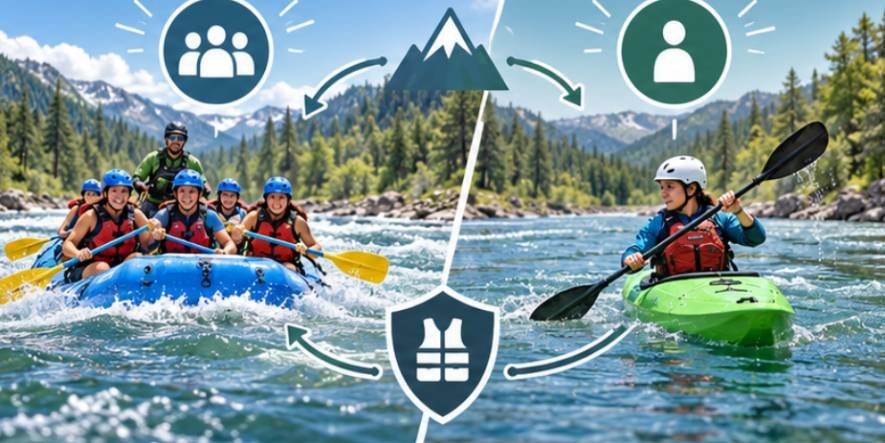
The biggest difference between rafting and kayaking is not the size of the boat. It is how much responsibility lands on the beginner. On a guided raft trip, a trained guide organizes steering, route choices, and emergency commands. In a kayak, the paddler is responsible for balance, direction, strokes, and recovery. That is why beginner rafting vs kayaking usually favors rafting for a first encounter with moving water, while kayaking suits people who want to build individual paddling skills.
The Short Answer: Rafting Usually Has the Gentler Entry Point
For most first-timers, guided whitewater rafting is easier to start because the workload is shared. A guide calls paddle commands, manages the raft’s line, and coordinates the crew. Beginners still paddle and must follow safety instructions, but they are not making every technical decision alone.
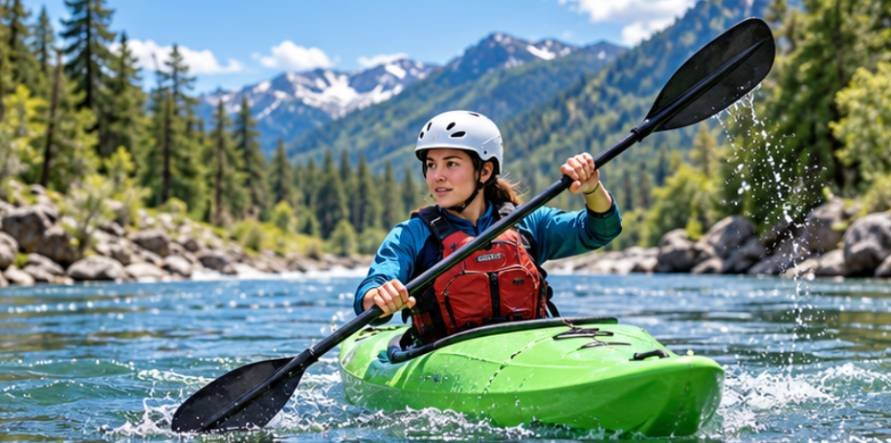
Kayaking asks more from one person. Even on mild moving water, a kayaker must control direction, judge current, avoid obstacles, and know what to do after a capsize. Recreational flatwater kayaking can be beginner-friendly, but whitewater kayaking has a steeper learning curve.
American Whitewater’s International Scale of River Difficulty helps explain why the setting matters. Class I is designated for beginner skill levels, Class II for novices, and Class III for intermediate paddlers. The organization also warns that water level, weather, remoteness, and changing river features can make the same run more demanding.
Beginner Rafting vs Kayaking at a Glance
| Factor | Guided rafting | Kayaking |
| Learning curve | Lower | Higher on moving water |
| Steering | Mostly guide-led | Paddler-led |
| Balance | More forgiving | More sensitive |
| Social experience | Group-oriented | Usually solo or tandem |
| Physical workload | Shared | Mostly individual |
| Capsize response | Group-supported | Requires personal skills |
| Best first setting | Guided Class I–II | Flatwater lesson |
This does not mean rafting is “safe” and kayaking is “unsafe.” The National Park Service’s whitewater guidance states clearly that running whitewater carries inherent risks. Boat type, river difficulty, water temperature, flow, instruction, and paddler behavior all influence the real risk on a particular trip.
Why Rafting Feels Easier to Many First-Timers
A More Forgiving Platform
A raft is wider and generally more forgiving of small balance mistakes. That lets nervous beginners focus on listening, paddling on command, and learning how moving current feels without simultaneously mastering precise boat control.
The guide also provides a decision-making buffer. As the raft approaches waves or obstacles, the guide reads the river and directs the crew.
Families and mixed-experience groups looking for suitable destinations can explore best river trips in the US for families when choosing a river experience that matches their comfort levels.
That support is especially useful for families, mixed-experience groups, and travelers who want an adventurous river experience without first completing a technical paddling course.
Teamwork Spreads the Work
Rafting is active, but effort is distributed across several paddlers. Couples looking for a shared outdoor experience can also explore weekend adventure getaways for couples for ideas that combine adventure activities with time together.
That independence is part of kayaking’s appeal, but fatigue can affect technique. A beginner who becomes tired may find it harder to make clean strokes, hold a useful boat angle, or react quickly to an obstacle.
Why Kayaking Can Be the Better Learning Sport
Kayaking provides immediate feedback. Travelers interested in observing marine life during coastal adventures can also explore places to see dolphins from shore for locations where dolphins may be spotted without getting on a boat.
A poorly timed stroke or incorrect boat angle changes the kayak’s path quickly, helping paddlers understand how current, momentum, balance, and boat control interact.”
A poorly timed stroke or incorrect boat angle changes the kayak’s path quickly, helping paddlers understand how current, momentum, balance, and boat control interact.
The American Canoe Association’s paddling safety curriculum emphasizes skills, rescue, equipment, and moving-water preparation. Its guidance recommends helmets on Class II or harder river sections and requires appropriately fitted life jackets during paddling activities.
For someone seeking a long-term paddling skill rather than a one-day guided adventure, a beginner kayaking lesson on calm water may therefore be the stronger start. Moving to whitewater should come after the paddler can turn, stop, exit after a capsize, recover appropriately, and understand basic river-safety procedures.
The Five-Minute Test Before Choosing Your First Trip
First, decide whether you want guided teamwork or personal boat control. Rafting fits the first goal; kayaking fits the second.
Second, check the river class. For a first moving-water experience, Class I or straightforward Class II makes more sense than assuming every trip advertised as “beginner-friendly” presents the same challenge.
Third, consider your capsize confidence. If exiting a small overturned boat sounds intimidating, guided rafting or an instructor-led flatwater kayak lesson provides a more gradual introduction.
Fourth, check the water, not only the weather forecast. The U.S. Geological Survey streamflow network provides current water-level and streamflow information. USGS specifically notes that its data are used to determine whether streams are suitable for recreational activities, and changing flows can significantly alter river conditions.
Fifth, evaluate the outfitter or instructor. Ask about qualifications, required equipment, expected rapid classes, age or swimming requirements, and what participants should do if somebody falls into the water.
Safety Rules That Apply to Both Activities
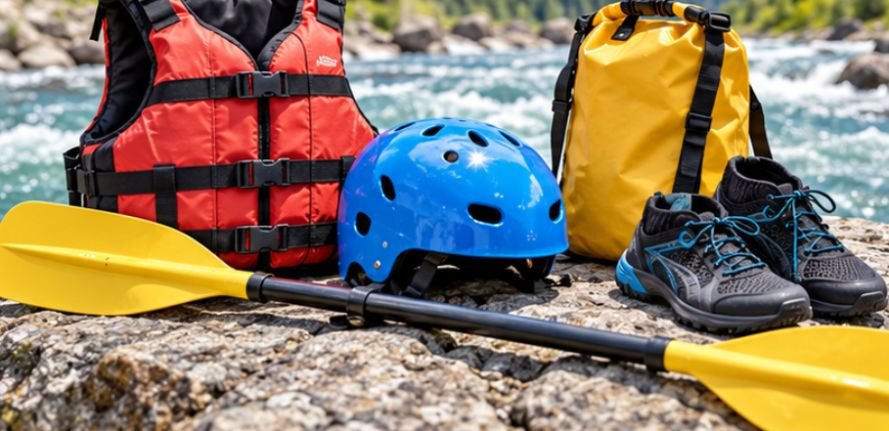
A personal flotation device is essential. The National Park Service advises river users to wear a properly fitting life jacket and warns that even strong swimmers can drown in moving water.
The American Red Cross life-jacket guidance similarly recommends a U.S. Coast Guard-approved life jacket that fits correctly and is designed for the intended activity.
Dress for water temperature rather than simply dressing for warm afternoon air. On whitewater, appropriate helmets, secure footwear, thermal protection when conditions require it, and river-specific rescue equipment may also be necessary.
Strong swimming ability is not a substitute for river judgment. Current, strainers, rocks, hydraulics, cold water, and sudden changes in flow introduce hazards that do not exist in a swimming pool.
Three Misconceptions Beginners Should Drop
Kayaking is not always harder. On a calm lake or protected slow-moving water, recreational kayaking may actually feel less intimidating than a whitewater rafting trip. The meaningful comparison is guided rafting versus kayaking in similar moving-water conditions.
Class II also does not automatically mean harmless. River classifications are approximate, and American Whitewater cautions that high flows, cold water, unfamiliar rivers, bad weather, and remote locations can increase both difficulty and consequences.
Finally, having a guide does not eliminate risk. Participants still need to listen closely, use required safety equipment, understand the planned river section, and follow instructions when conditions change.
Frequently Asked Questions
1. Is rafting safer than kayaking for beginners?
Guided rafting often provides beginners with more support and shared control, but safety still depends on river class, flow, equipment, instruction, weather, and participant behavior.
2. Can I kayak if I have never paddled before?
Yes. Start on calm, protected water with instruction. Learn basic strokes, wet exits, recovery, life-jacket use, and boat control before progressing to moving water.
3. What river class is best for a first trip?
Class I is the clearest beginner category. Straightforward Class II water can suit novices when conditions, appropriate instruction, and reliable local information support it.
4. Do I need to know how to swim?
Requirements vary by outfitter or paddling program, but water confidence helps. A properly fitted life jacket remains essential even for strong swimmers.
Start With the Experience You Want to Build
The best first river day is not the one with the biggest rapid; it is the one that leaves you confident enough to return. If you want a social adventure with professional direction, guided rafting usually offers the smoother introduction.
If you want precise boat control and eventual independence, begin kayaking on calm water with quality instruction and progress gradually. With beginner rafting vs kayaking, the smarter choice is matching responsibility, river difficulty, instruction, and your comfort level. Start below your limits, learn what moving water actually feels like, and give yourself somewhere to progress on the next trip.