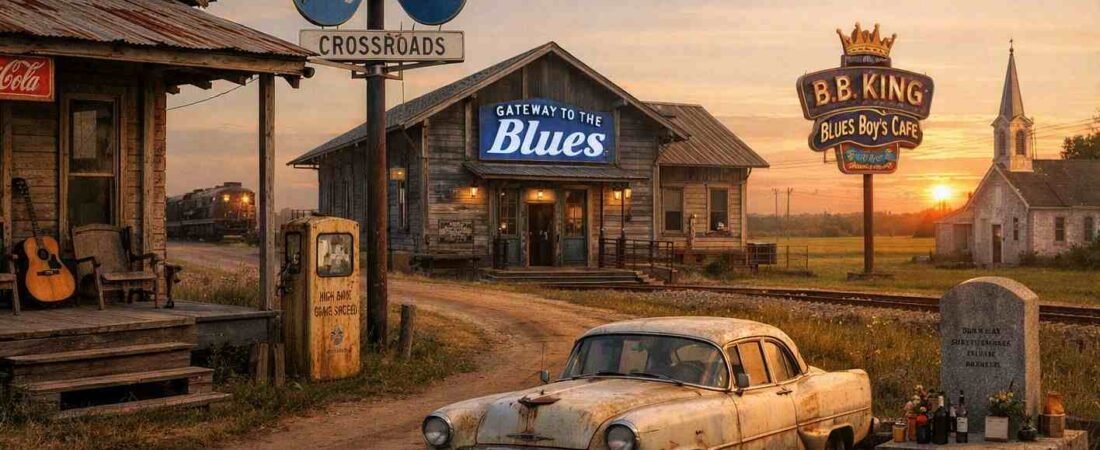
Mississippi is often called the birthplace of the blues, and a drive through the Delta shows why. Its musical history lives in cotton plantations, railroad towns, churches, museums, juke joints, and more than 200 Mississippi Blues Trail markers.
For me, exploring blues heritage sites in Mississippi is about more than seeing famous landmarks. It is a way to understand the African American communities, labor, migration, and creativity that shaped one of America’s most influential musical traditions.
Why Is Mississippi Known as the Birthplace of the Blues?
The blues developed across African American communities in Mississippi during the late 19th and early 20th centuries. Work songs, spirituals, field hollers, folk traditions, guitar styles, and community gatherings all fed into the music. Musicians moved between plantations, churches, railroad stops, and juke joints, carrying songs and techniques with them.
Today, the Mississippi Blues Trail links that history through more than 200 markers honoring musicians, venues, neighborhoods, recording sites, and events.
What Should You See at the Delta Blues Museum in Clarksdale?
Clarksdale is one of the best places to begin a Mississippi blues road trip. The Delta Blues Museum, established in 1979, is Mississippi’s oldest music museum and occupies a historic railroad freight depot.
One standout exhibit is the remains of the sharecropper cabin from Stovall Farms where Muddy Waters lived while working as a tractor driver. Nearby, the intersection of Highways 61 and 49 is associated with the famous Crossroads legend about Robert Johnson. That story is folklore rather than documented history, but the site remains one of the most recognizable places in blues culture.
Why Is Dockery Farms Important to Delta Blues History?
Near Cleveland, Dockery Farms offers a direct connection to early Delta blues. Founded in 1895, the plantation became closely associated with Charley Patton, whose influence reached Howlin’ Wolf, Willie Brown, Tommy Johnson, and Pops Staples.
Is GRAMMY Museum Mississippi Worth Visiting?
Also in Cleveland, GRAMMY Museum Mississippi broadens the story beyond blues. Its immersive exhibits and hands-on experiences explore Mississippi’s influence on American and global music.
What Can You Experience at the B.B. King Museum in Indianola?
The B.B. King Museum and Delta Interpretive Center connects King’s life and music with the wider story of Delta agriculture, race, and community. Part of the museum incorporates a historic cotton gin associated with the site.
Nearby Club Ebony, now owned by the museum, has hosted B.B. King, Howlin’ Wolf, Ray Charles, James Brown, and other major performers.
Where Can You Learn About Robert Johnson Near Greenwood?
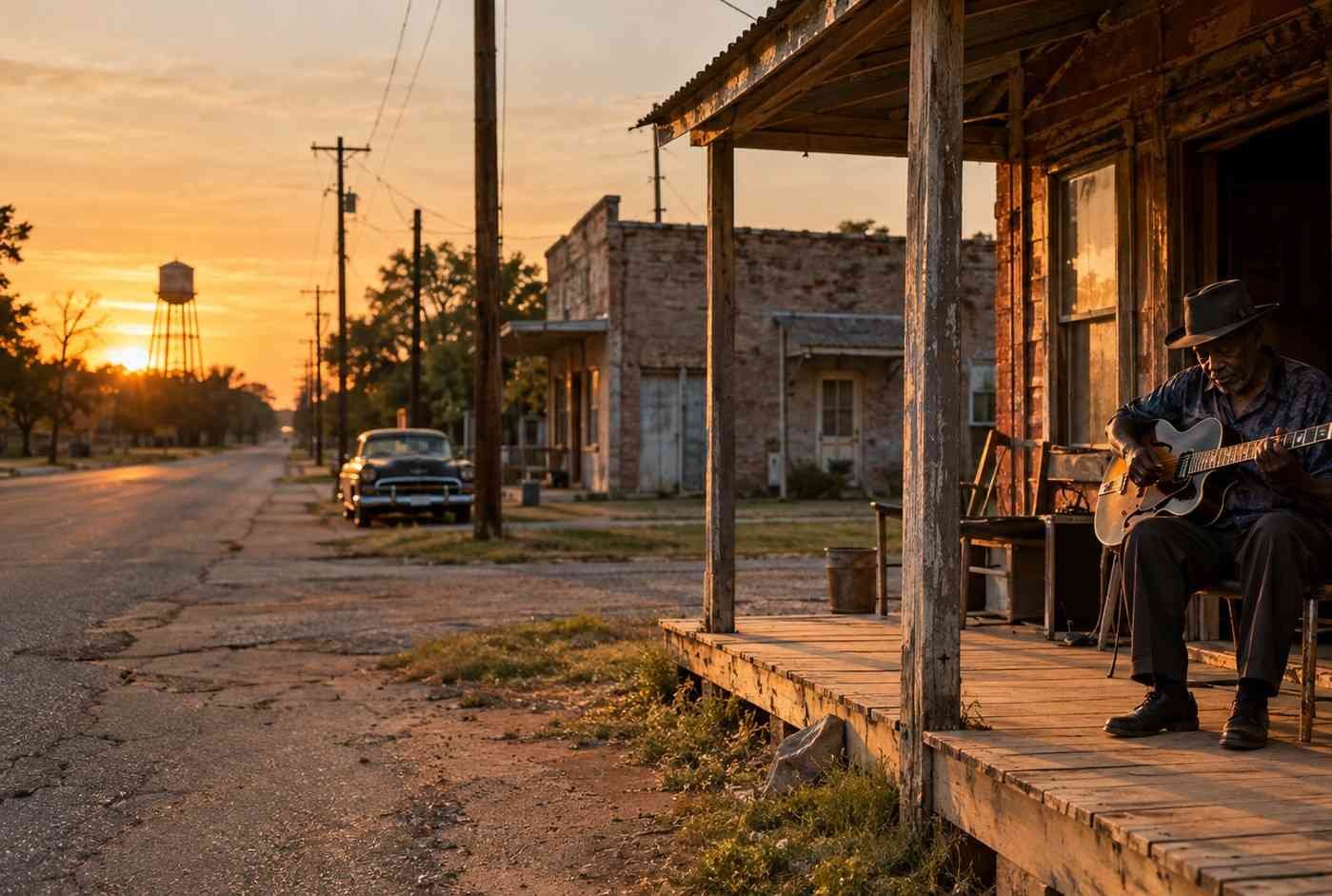
Robert Johnson recorded only 29 songs, yet his influence reaches deep into blues and rock. Near Greenwood, the Little Zion Missionary Baptist Church cemetery contains the gravesite generally regarded as his most likely burial place, although uncertainty has long surrounded exactly where he was buried.
Why Start at the Gateway to the Blues Museum in Tunica?
For travelers entering the Delta from Memphis, the Gateway to the Blues Museum in Tunica is a natural first stop. Located along Highway 61, the “Blues Highway,” it uses interactive exhibits to explain blues musicians, guitars, lyrics, and musical styles.
Visitors can also use a recording-studio exhibit to learn basic blues concepts and record their own blues song.
Where Can You Hear Live Delta Blues in Clarksdale?
Historic sites matter, but the blues is still a living tradition. Ground Zero Blues Club, co-owned by actor Morgan Freeman, opened in 2001 and remains one of Clarksdale’s best-known venues. It currently promotes live music Wednesday through Saturday and serves Delta-style food.
Red’s offers a smaller, old-school juke-joint experience. The no-frills venue remains one of Clarksdale’s most intimate places to hear local blues musicians.
Why Do Po’ Monkey’s Lounge and the Blue Front Cafe Matter?
Po’ Monkey’s Lounge near Merigold was one of the most famous surviving rural juke joints in the Delta. Willie “Po’ Monkey” Seaberry opened it around 1963. The club is no longer operating, but the structure remains an important landmark representing the rural gathering places where people danced and heard blues for generations.
In Bentonia, the Blue Front Cafe represents another side of living blues culture. Opened by Carey and Mary Holmes, it became closely connected with the distinctive Bentonia blues tradition. Skip James and Jack Owens were among the musicians associated with the venue, while Jimmy “Duck” Holmes later carried the tradition forward.
How Should You Plan a Mississippi Blues Road Trip?
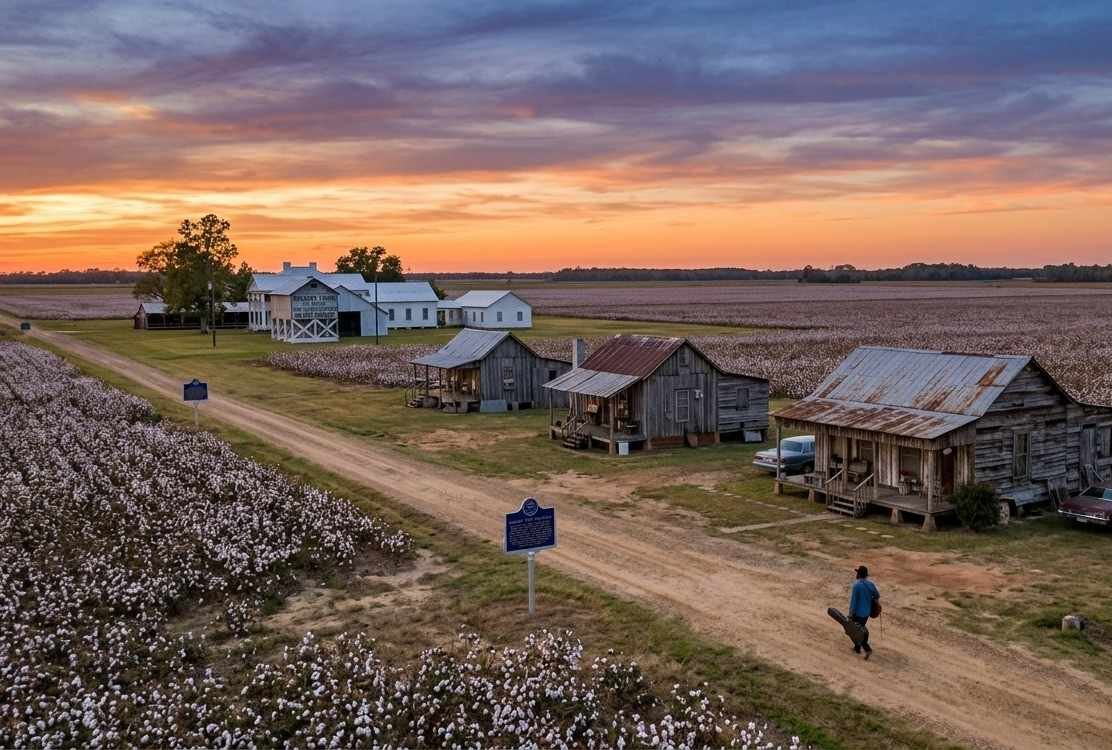
I would begin in Tunica, continue to Clarksdale, then travel south toward Cleveland and Dockery Farms before visiting Indianola, Greenwood, and Bentonia. That route follows much of the cultural geography associated with Highway 61.
These stops become more meaningful when you connect them. Museums explain the musicians, plantation landscapes reveal the environment, Blues Trail markers provide local context, and juke joints show how music became part of everyday social life.
FAQs About Mississippi Blues History
1. How Many Mississippi Blues Trail Markers Are There?
There are more than 200 markers documenting musicians, communities, venues, events, and locations tied to blues history.
2. What Is the Best Mississippi City for Blues History?
Clarksdale is one of the most concentrated destinations because it combines the Delta Blues Museum, the Crossroads, Blues Trail sites, and multiple live music venues.
3. Can You Still Hear Live Blues in the Mississippi Delta?
Yes. Clarksdale continues to host live blues throughout the week at Ground Zero, Red’s, and other local clubs and juke joints.
Final Thoughts
What makes blues heritage sites in Mississippi unforgettable is the way history and living culture overlap. The Delta Blues Museum preserves artifacts, Dockery Farms preserves landscape, the B.B. King Museum tells a personal story, and places such as Ground Zero, Red’s, and the Blue Front Cafe keep the music connected to real communities.
For anyone interested in American music, a Mississippi blues journey reveals how African American creativity, migration, hard work, and regional culture produced a sound that eventually traveled from the Delta to the world.