A sunny 80°F day can still put you in dangerously cold water. The National Weather Service warns that cold-water shock can be serious even in water around 50–60°F, so the smartest packing list starts with the river temperature, not the forecast. If you are wondering what to pack for a whitewater rafting trip, think in three groups: what you wear, what you secure on the raft, and what waits dry at the take-out.
For most guided U.S. day trips, that means quick-drying clothing, secure footwear, sun protection, water, essential medication, and a dry change afterward.
Start With the Water Temperature
Rafting clothing must still work after it is soaked. Cotton T-shirts, denim, sweatshirts, and cotton underwear hold water and can leave you cold after a swim, heavy splash, or windy section.
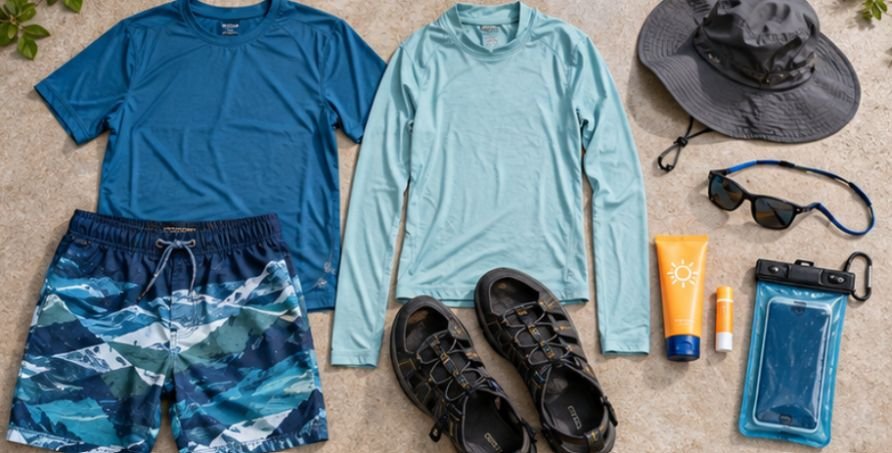
Wear a swimsuit, boardshorts, or synthetic base layer against your skin. Add a polyester, nylon, or merino shirt. A long-sleeve UPF top is useful on exposed rivers where shade is scarce.
American Whitewater’s 2024 Safety Code recommends wool or synthetic thermal layers and notes that wetsuits or drysuits are commonly used when water temperatures fall below 50°F. It also advises paddlers to dress for an unexpected swim, not merely the air temperature.
That matters on snowmelt rivers in Colorado, Idaho, Montana, California, and the Pacific Northwest. The National Weather Service notes that sudden cold-water immersion can trigger gasping, rapid breathing, and loss of muscle control.
A useful test is simple: would you be reasonably comfortable wearing your outfit after it was completely wet for 20 minutes? If not, add insulation or ask about a wetsuit or splash jacket.
| River conditions | Wear in the raft | Extra step |
| Warm air, warm water | Swimsuit/shorts, synthetic or UPF top | Secure shoes and sun protection |
| Warm air, cold snowmelt | Synthetic layers, light insulation | Ask about wetsuit or splash jacket |
| Cool or shoulder season | Wool/synthetic thermal layer | Confirm cold-water gear availability |
| Long, exposed trip | UPF long sleeves | Carry water and sunscreen |
What to Pack for a Whitewater Rafting Trip on a Guided Day Run
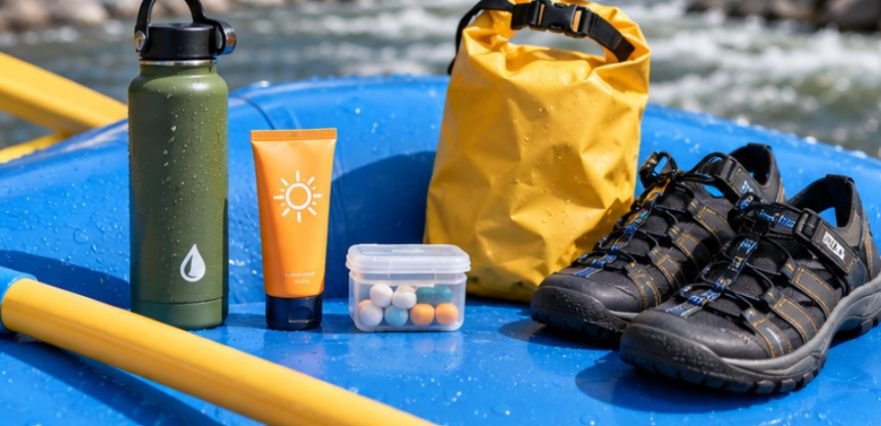
Start with footwear that cannot float away. Sport sandals should have heel straps; old athletic shoes work on many trips. Avoid flip-flops and loose slides. Rocky shorelines and swift water make bare feet a poor backup plan.
“For families planning a river adventure, choosing a suitable route is just as important as packing the right gear, especially when considering different river trips for families.
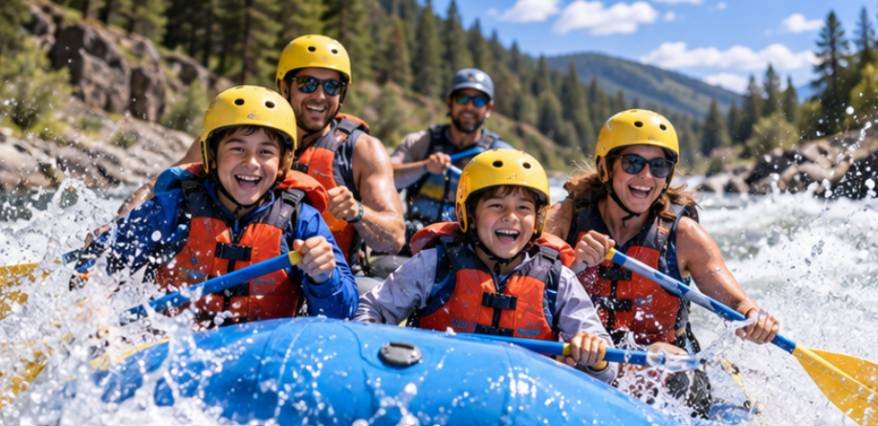
The National Park Service recommends a properly fitting life jacket around moving water and warns that strong swimming ability is not a substitute. On a commercial trip, use the PFD and helmet assigned by your outfitter unless the company approves personal gear.
If you are still deciding between the two activities, understanding the differences between beginner rafting and kayaking can also help you prepare for the right type of trip.
Bring sunglasses with a snug retention strap. A low-profile cap may fit under some helmets, but anything that affects helmet fit should stay off.
For sun protection, pack broad-spectrum, water-resistant SPF 30 or higher sunscreen plus SPF lip balm. Johns Hopkins University recommends reapplying about every two hours and after swimming or sweating. Remember ears, neck, thighs, and tops of feet.
Carry a refillable water bottle that can be secured according to the outfitter’s rules. The CDC advises drinking and refilling regularly on hot days rather than relying only on thirst.
Pack essential prescription medication in a labeled waterproof pouch. Tell the guide about time-sensitive emergency medications, such as rescue inhalers or epinephrine, so they remain accessible.
Keep the Raft Load Small
A raft is not a floating locker. Phones, wallets, keys, cameras, jewelry, and loose accessories can disappear during a flip or unexpected swim.
Leave valuables in secure storage when possible. If you take a phone, use a waterproof case with a dependable tether. Water resistance does not keep a device from sinking or drifting downstream.
Do not automatically bring a backpack or large dry bag on a guided half-day trip. Some outfitters restrict personal bags because of space and snag hazards. Ask whether the guide provides shared dry storage.
Private boaters need a broader equipment plan. American Whitewater includes first aid, communication devices, spare layers, extra food and water, navigation tools, and rescue gear in its group-equipment guidance. Guided guests should confirm what the company supplies rather than duplicating technical equipment.
What Should Stay in the Car?
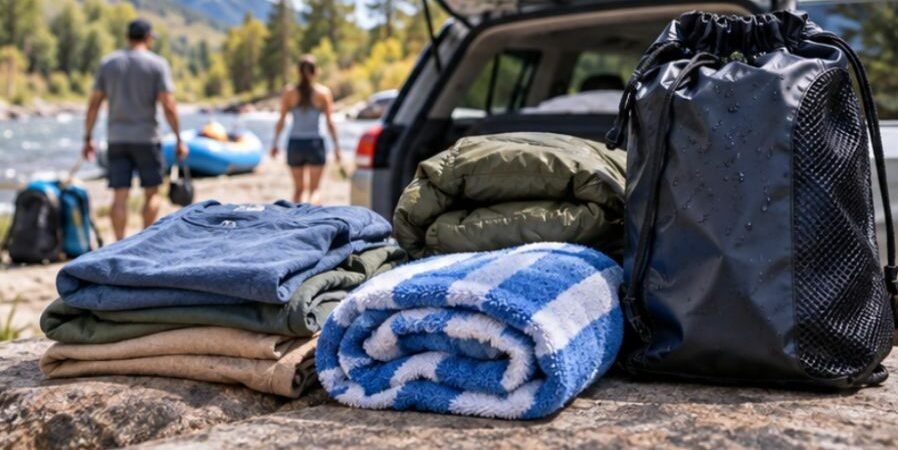
Leave a towel and complete dry outfit at the take-out or in the vehicle: underwear, socks, shoes, pants, and a warm top. Add a bag for wet clothing and, in cool weather, a fleece or synthetic insulated layer.
Keep your wallet or payment method accessible for food, trip photos, souvenirs, or a guide gratuity where tipping is customary. If a shuttle moves your vehicle, confirm where your dry clothes will be waiting.
The Five-Question Check Before Leaving Home
Packing needs vary by river, season, water level, and outfitter. Before the trip, confirm whether PFDs and helmets are supplied, whether wetsuits or splash jackets are included or rented, what footwear is prohibited, whether bottles or phones are allowed, and where dry clothes should be stored.
A July float on a warm Southeastern river is not the same as a June snowmelt run in the Rockies. Rapid classification alone does not tell you water temperature, sun exposure, weather, or shuttle logistics.
Checking UV conditions is also worthwhile on exposed Western trips. The EPA notes that UV rays can reach people on cloudy days and reflect from surfaces such as water.
Common Packing Mistakes
Cotton clothing is the classic error because it feels comfortable at the launch but performs poorly once wet. Loose footwear is another. So is treating sunscreen as a one-time morning task.
Anything not zipped, clipped, or intentionally secured should be considered potentially lost. Leave expensive jewelry and unnecessary electronics behind.
Finally, do not assume personal technical gear is better than the outfitter’s. Commercial operators may use specific equipment standards and fitting procedures. Follow their instructions.
Frequently Asked Questions
1. Can I wear sneakers whitewater rafting?
Yes, if they fit securely and the outfitter allows them. Older athletic shoes often provide good rock protection, but expect them to become completely wet.
2. Should I bring a dry bag rafting?
Ask first. Many guided day trips restrict personal bags or provide group storage. A small waterproof pouch may be enough for medication and essentials.
3. Do I need a wetsuit for whitewater rafting?
It depends on water temperature and weather. Cold snowmelt trips may require one even on warm days, so confirm rental or included gear before arrival.
4. Can I take my phone on a raft?
Only if the outfitter permits it. Use a waterproof case with a secure tether, and remember that water-resistant electronics can still be lost downstream.
Pack for the Swim You Hope Never Happens
The best rafting packing list is not the longest one; it is the one that still works after the first wave hits. Choose quick-drying layers, secure everything that goes on the raft, protect yourself from sun and cold, and leave a full dry outfit waiting at the finish.
Most importantly, read the outfitter’s instructions before buying specialized gear. The river may be far colder than the parking lot feels, especially on snowmelt runs. Pack for possible immersion first and convenience second, and you will arrive prepared without hauling unnecessary gear to the put-in.